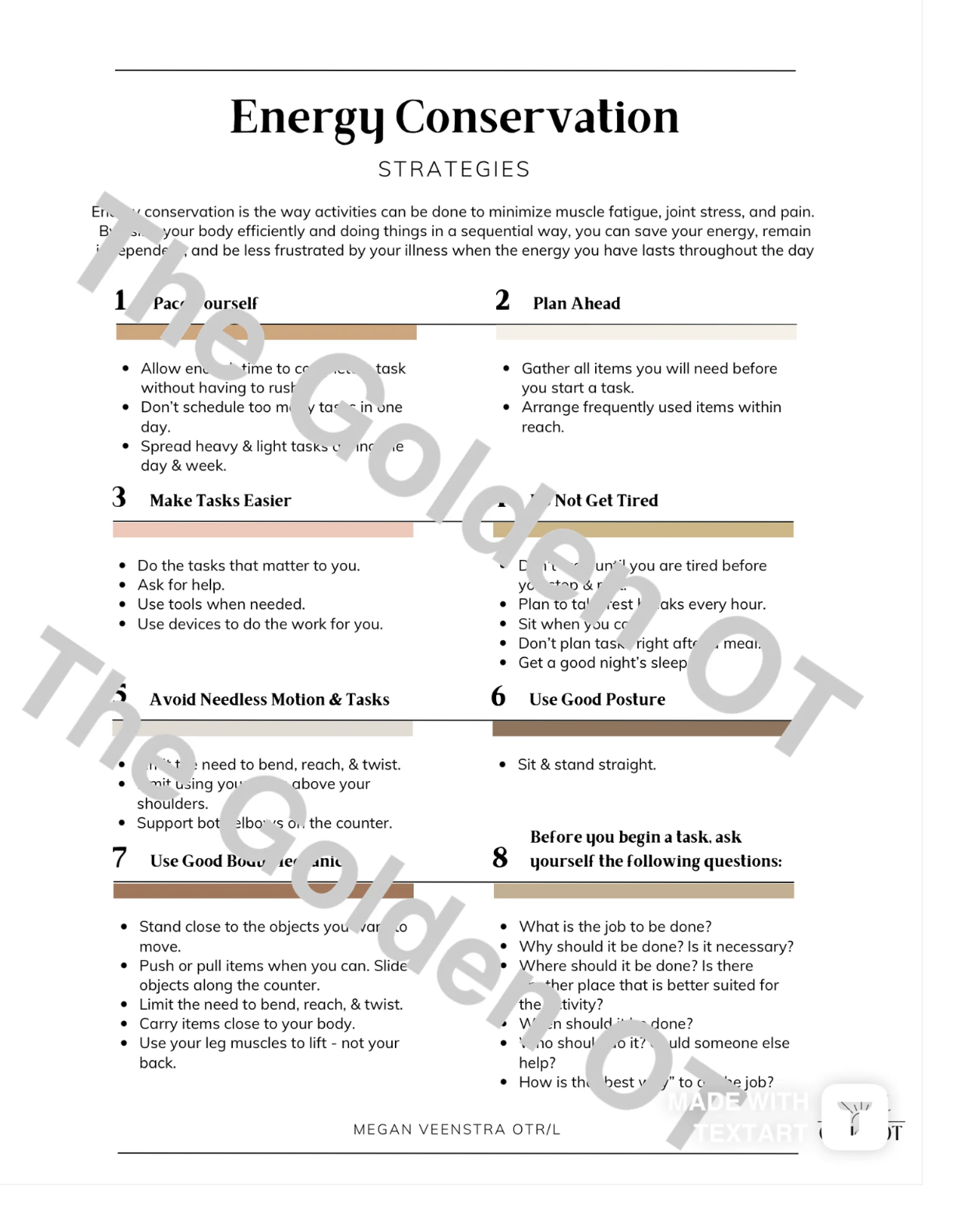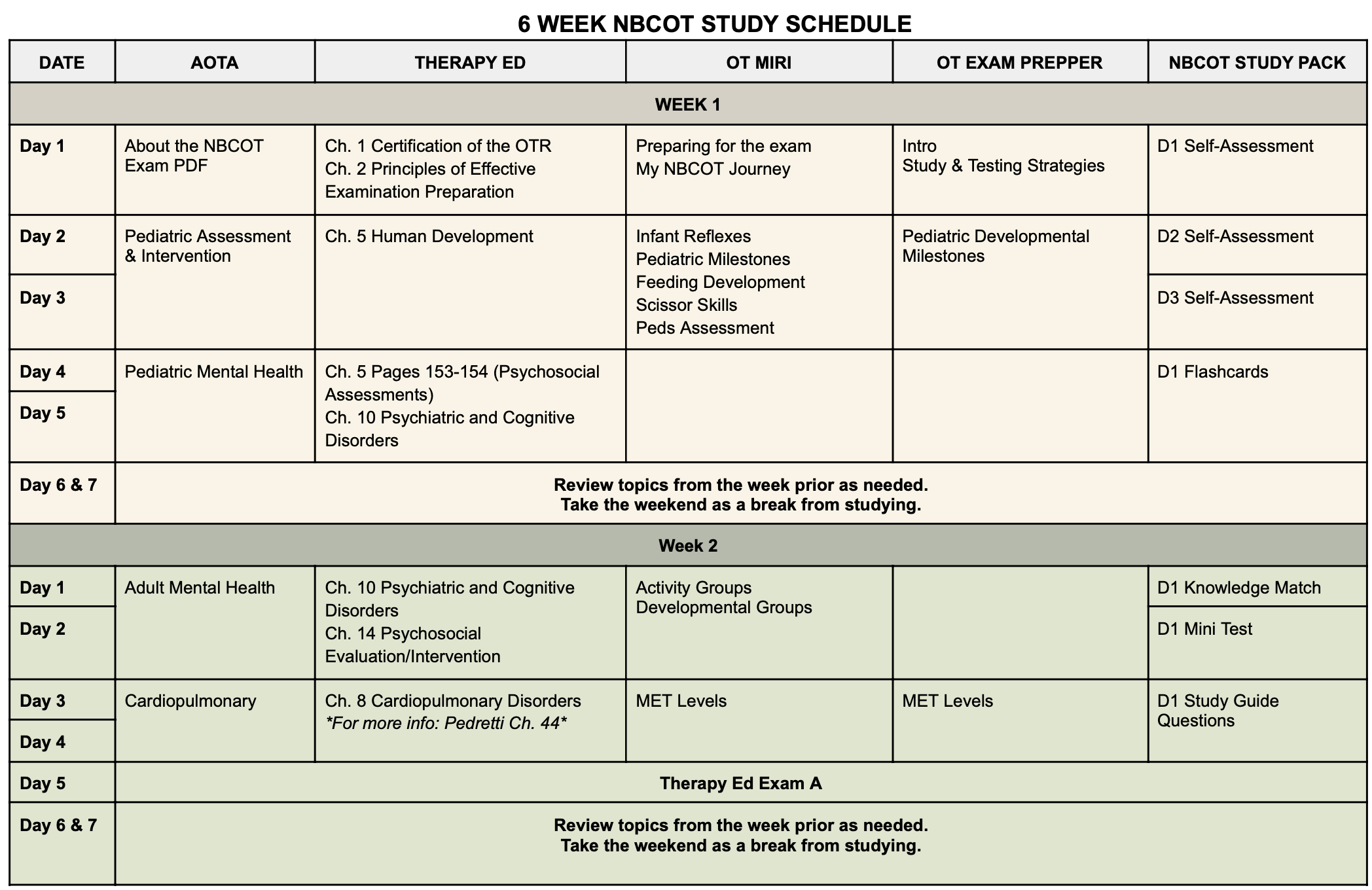
Introducing a comprehensive 6 week study schedulefor the NBCOT exam. This schedule was created to help you stay organized and focused during your preparation for the NBCOT exam.
This schedule uses top resources including AOTA, TherapyED, OTMiri, OT Exam Prepper, and NBCOT assigning daily tasks such as reading, videos, podcasts, practice questions, and practice exams.
Designed to keep you on track. This study schedule ensures you cover essential content while incorporating weekend rest breaks and practice exams.
Achieve your best with a structured and supportive approach to your NBCOT exam prep.
Recommend printing the PDF and tape the schedule together.
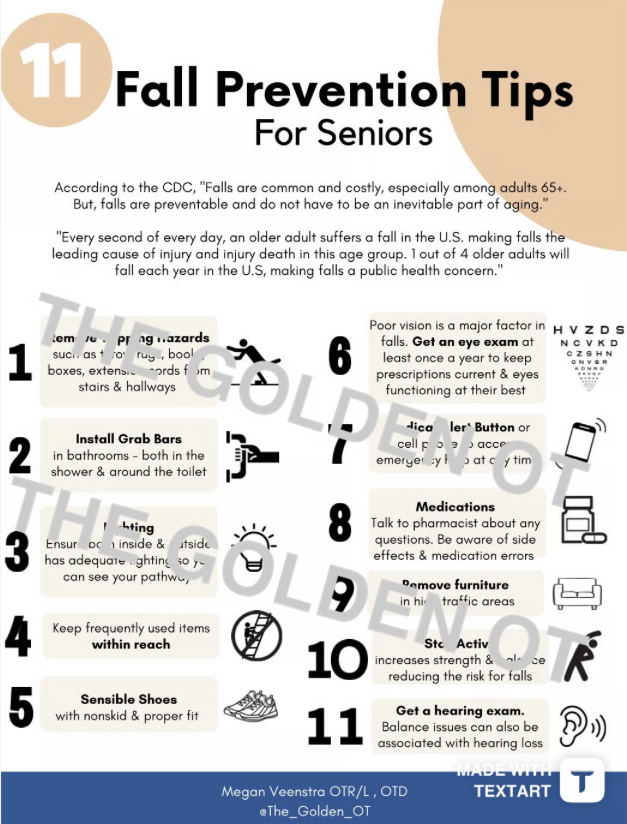
Need a quick and easy to read handout on fall prevention tips?
I work in a SNF setting and just about everyday am educating my patients on fall prevention. I was struggling to find an quick, concise, and appealing handout.
So I created my own!
Here are 11 quick and concise fall prevention tips that can make a difference in your patients outcomes.
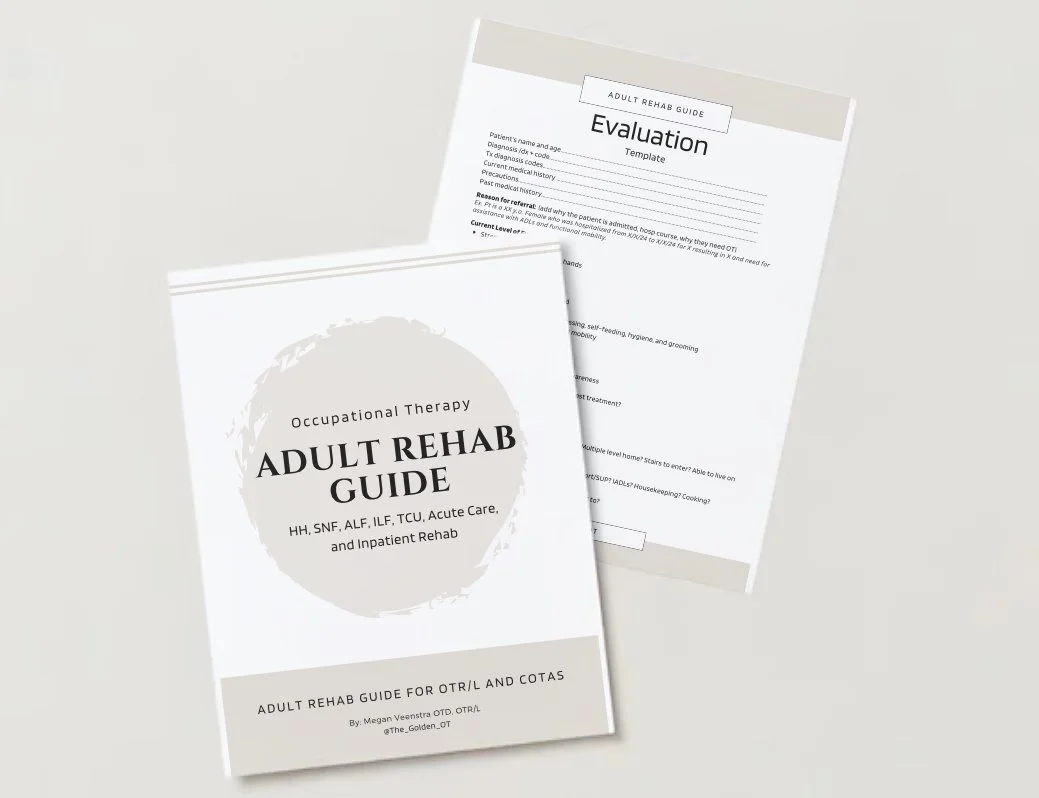
Adult Rehab Guide for OTR/L and COTAs interested in the adult setting including - SNF, HH, ALF, ILF, and inpatient rehab.
10 page guide filled with examples and tips to make our everyday skilled treatment sessions efficient and effective.
Topics Included:
Evaluation template
ICD and CPT Codes
Goal examples
Frequently used assessments
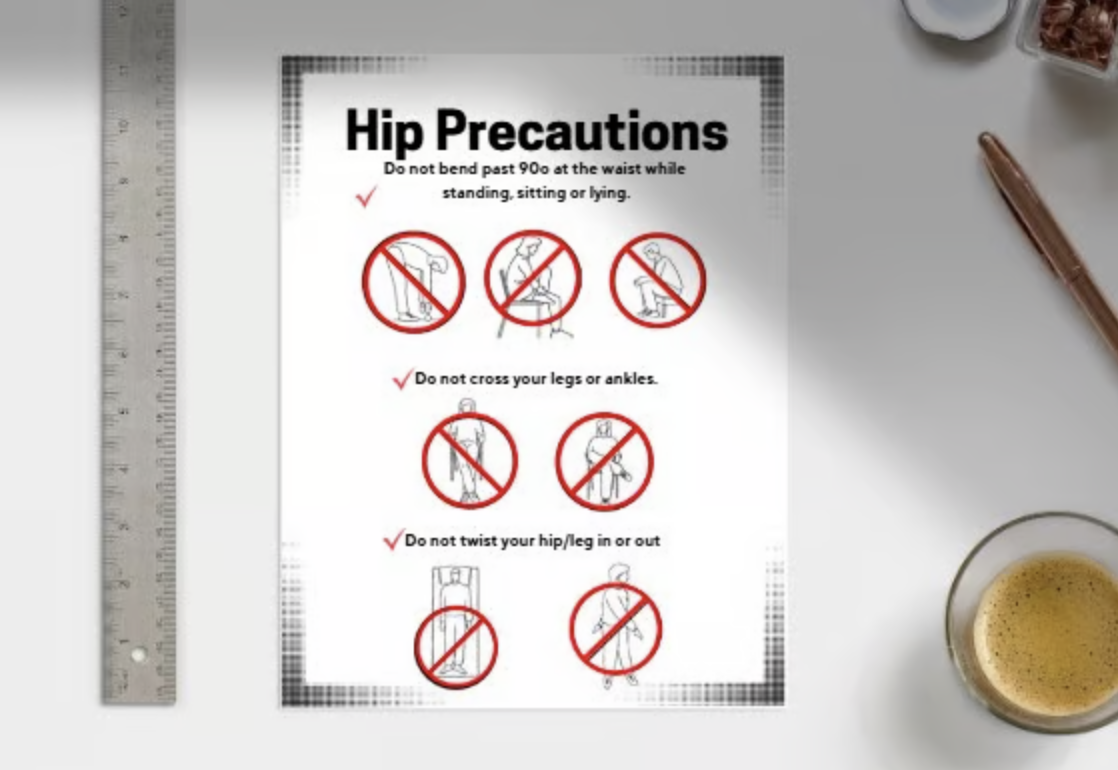
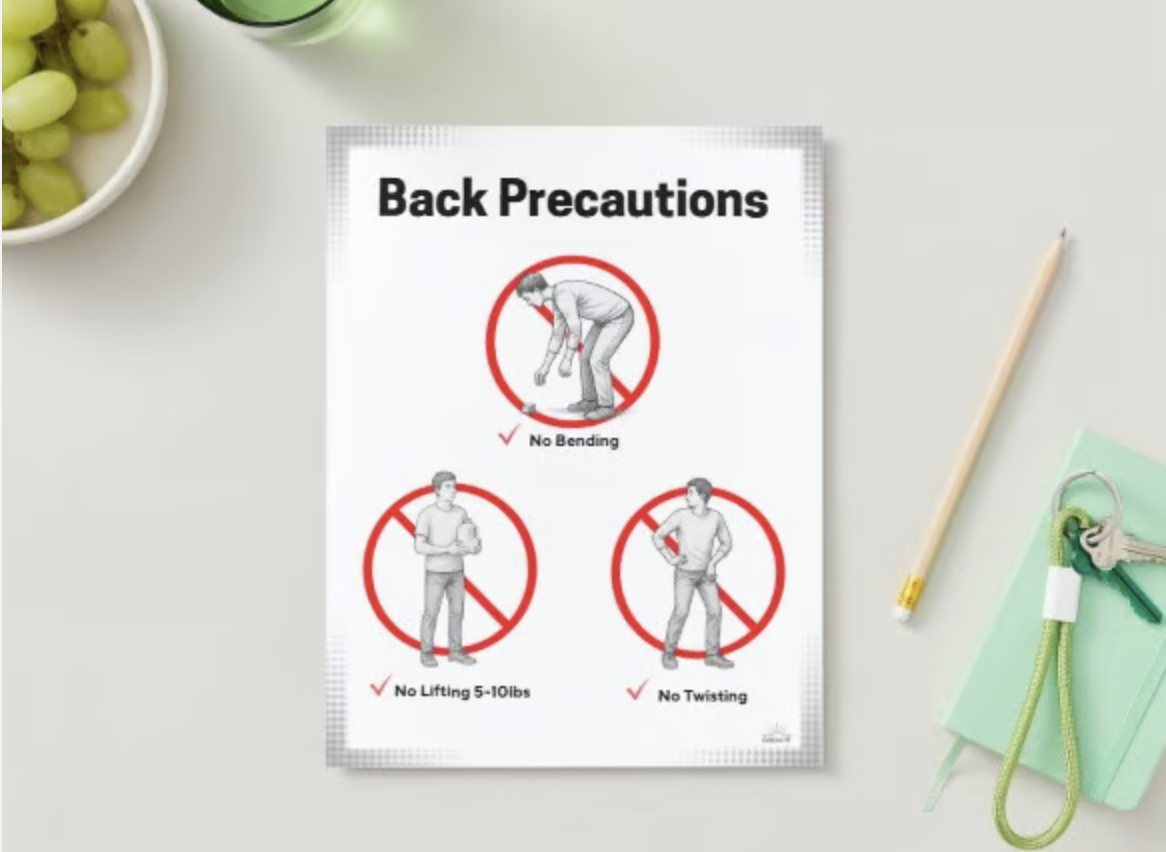
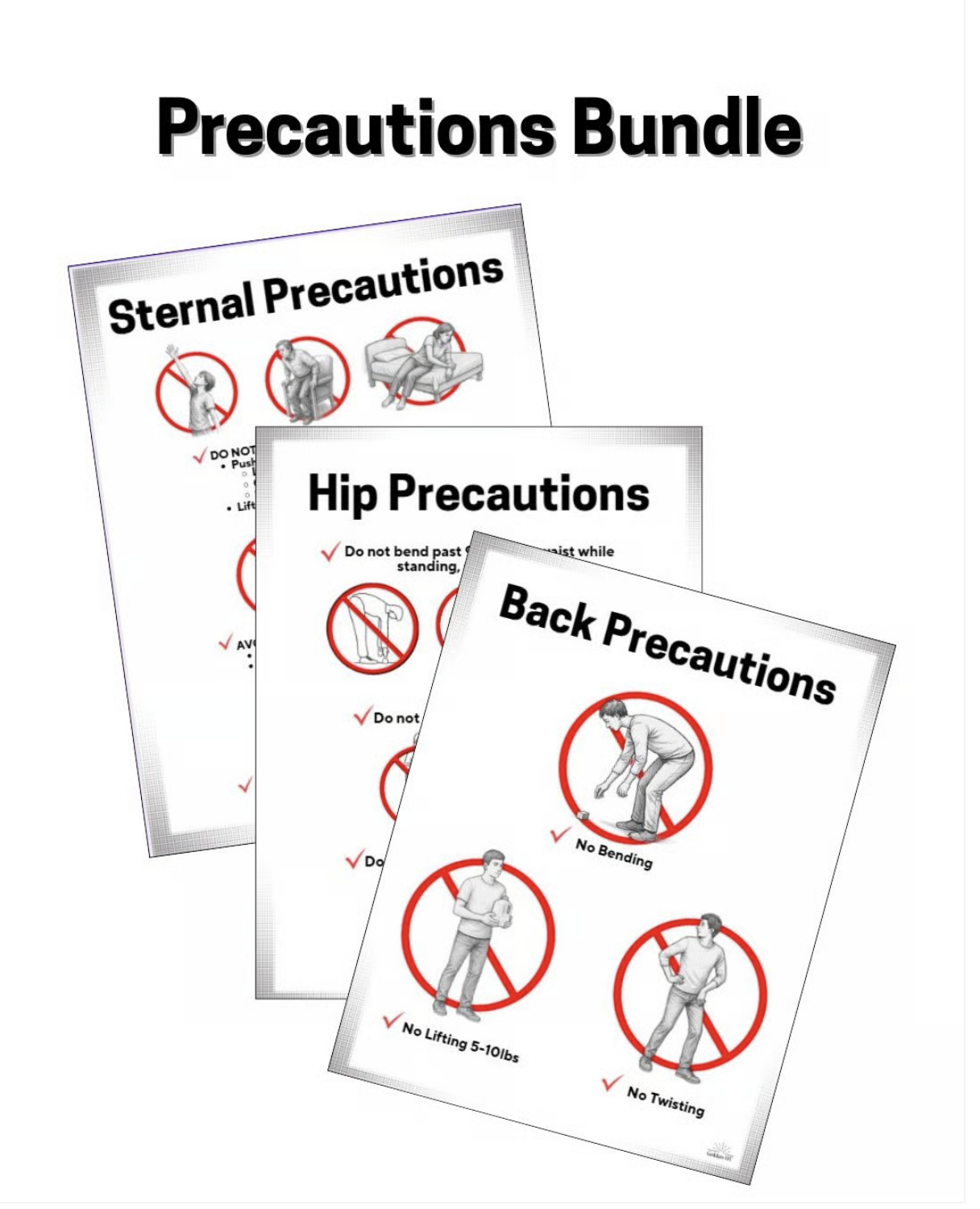
Precautions
Abbreviations
Skilled wording
Documentation examples
Education on billing & Insurance
Productivity tips
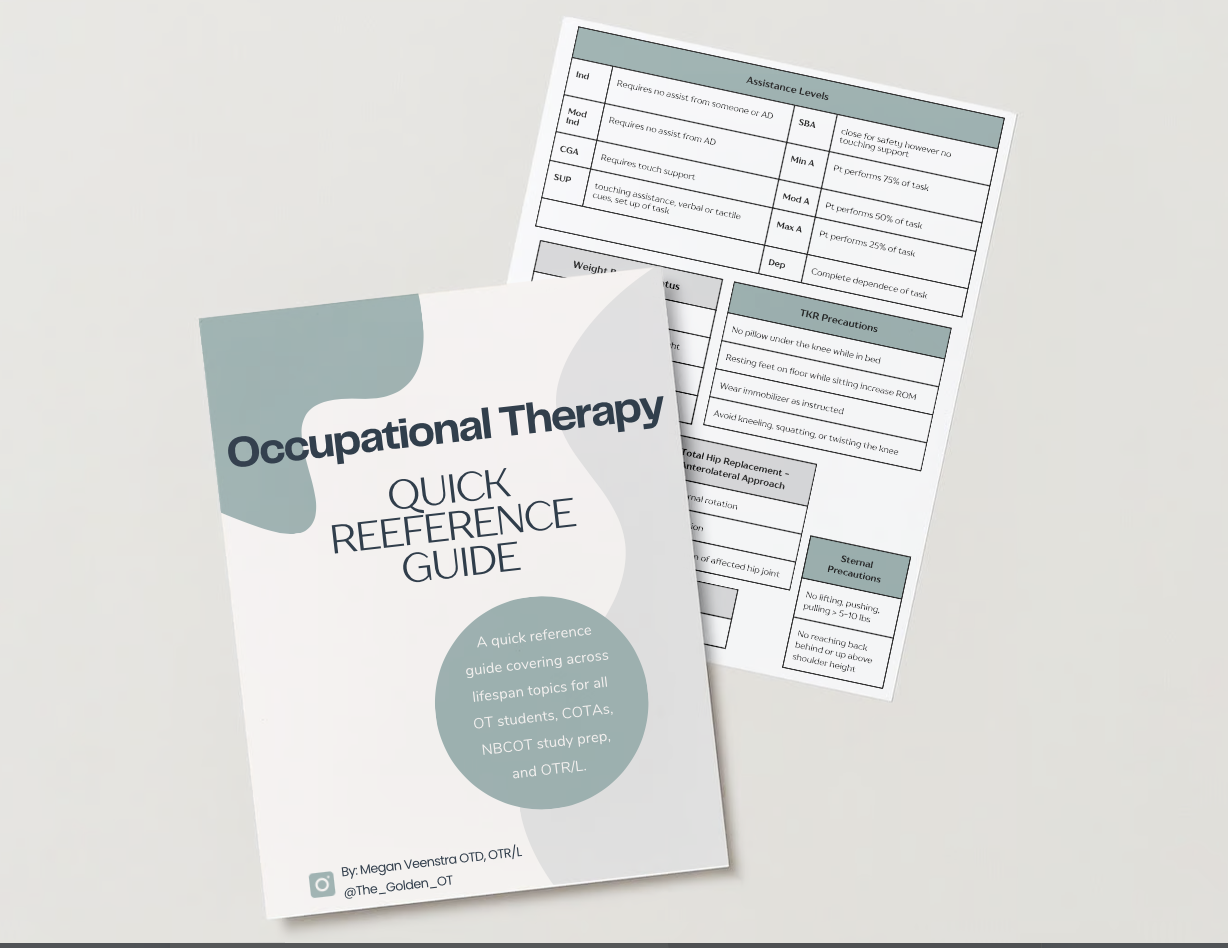
Nine page PDF covering across lifespan topics for all OT students, NBCOT study guide, COTAs, and OTR/L in various settings.
Topics cover:
Assistance levels
WB Precautions
Common surgical precautions
SCI muscle actions and functional considerations
Commonly used scales
PAMs
Reisber’s 7 stages of dementia
ROM norms
MMT
Developmental Milestone
Wheelchair Measurements
ADA standards
Insurance
Ever feel overwhelmed with limited time? I got you covered!
As OTs and PTs we are constantly recommending adaptive equipment to promote independence and safety. Printing handouts and finding adaptive equipment resources can be time consuming.
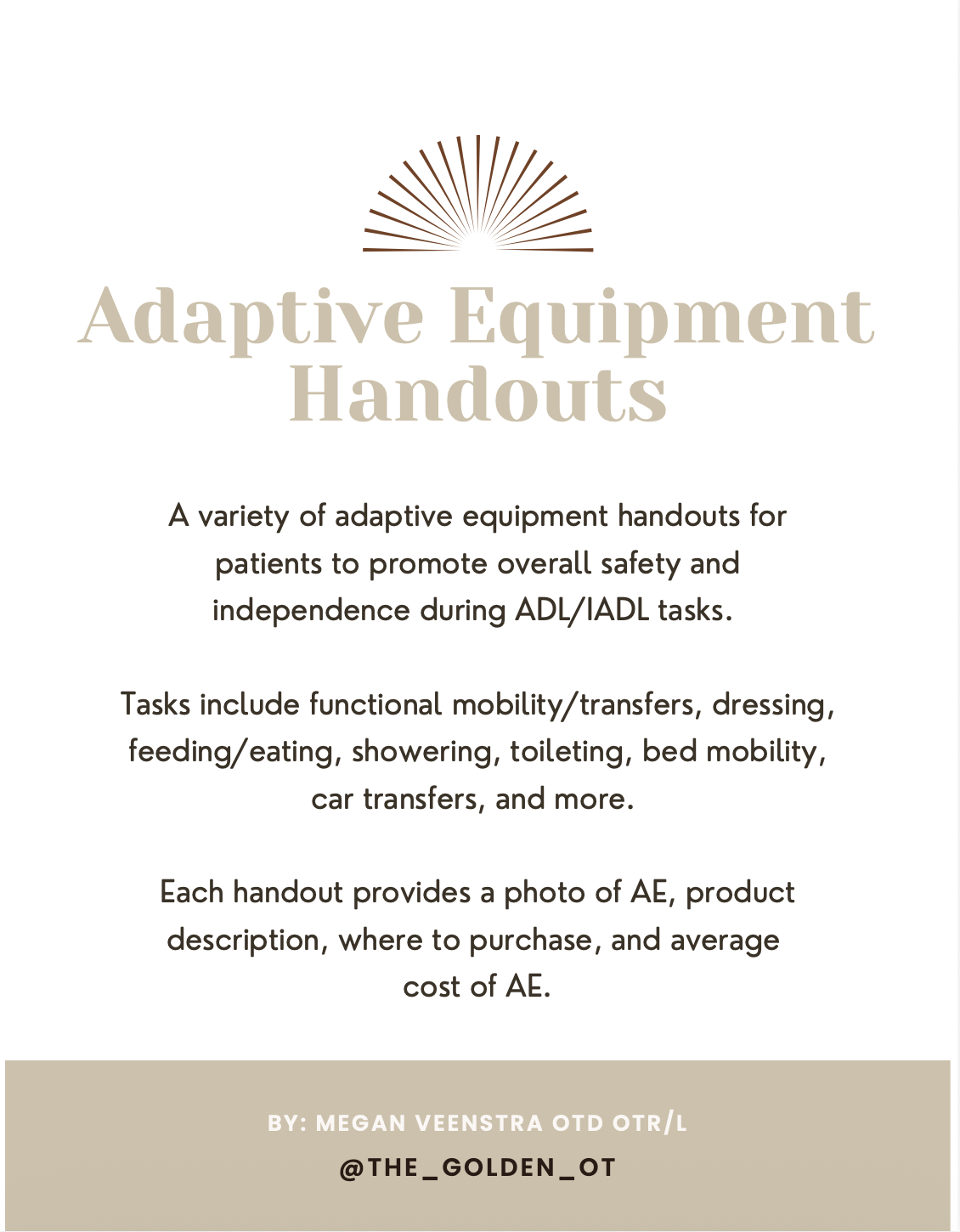
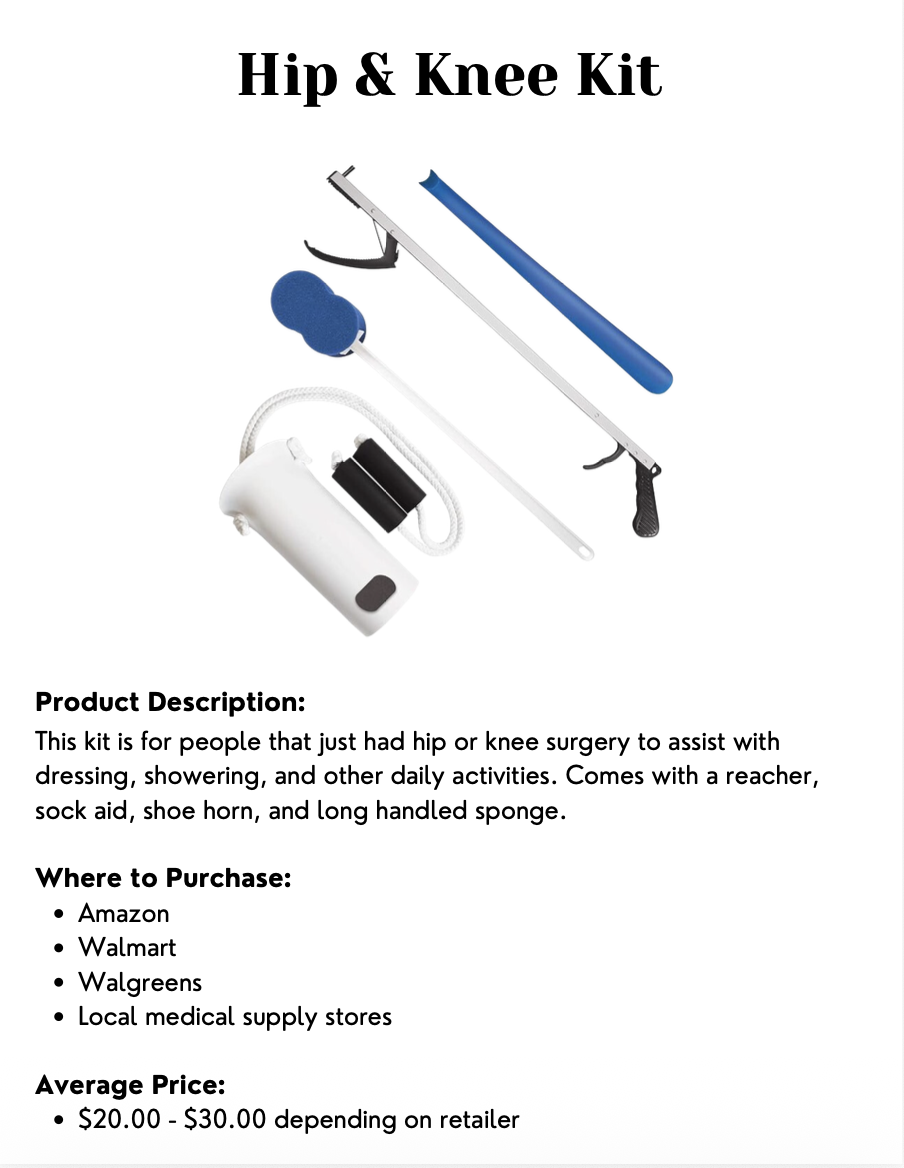
UPDATED to 53 pages of adaptive equipment PDF handouts for patients to promote overall safety and independence during ADL/IADL tasks.
I’ve included the most common AE for ADL/IADL tasks including:
Functional mobility/transfers
Dressing
Feeding/eating
Showering
Toileting
Bed mobility
Car transfers
And more
Each handout provides:
photo of AE
product description
where to purchase
average cost of AE
I recommend creating AE handout binder with multiple copies of each AE printed to increase OT/PT efficiency and time management.
Beach Ball Group Activity
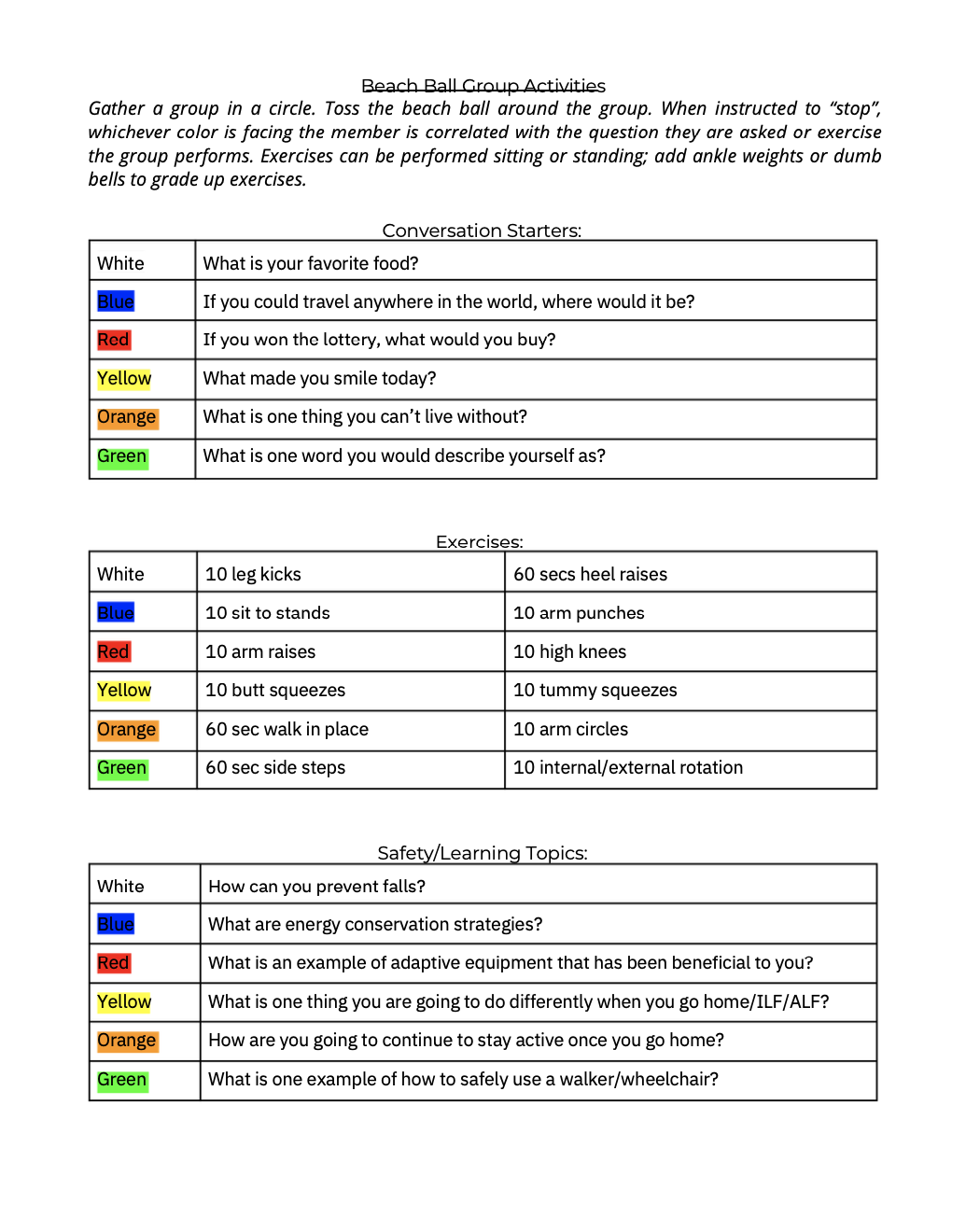
Active and educational group activity.
Includes:
Conversation starter questions
UB, LB, and core exercises
Edu topics including EC, fall prevention, safety, AE, etc.
Gather a group in a circle. Toss the beach ball around the group. When instructed to “stop”, whichever color is facing the member is correlated with a question for the individual or exercise performed as a group.
Exercises can be graded up and down by sitting or standing; adding ankle weights or dumb bells.
In OT documenting patient care is as crucial as the treatment itself.
Documentation requirement are to demonstrate (1) medically necessary and (2) skilled service being provided.
Effective documentation in OT not only ensures compliance and proper reimbursement but also serves as a vital communication tool among healthcare providers.
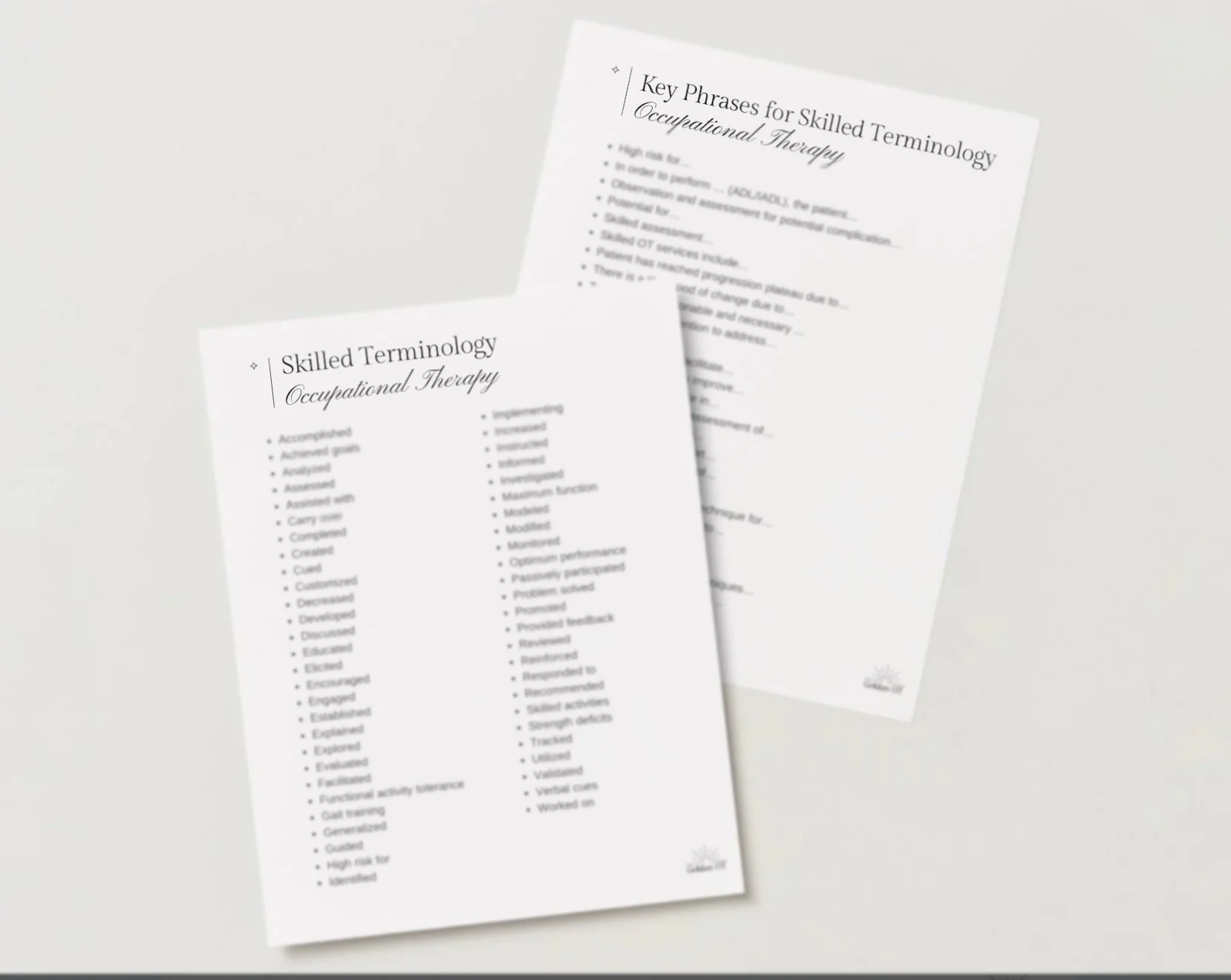
To help therapists improve their documentation the following PDF highlights skilled terminology and skilled terminology phrases to emphasize the importance of skilled and patient centered notes.
Simple Functional Cognitive Activity
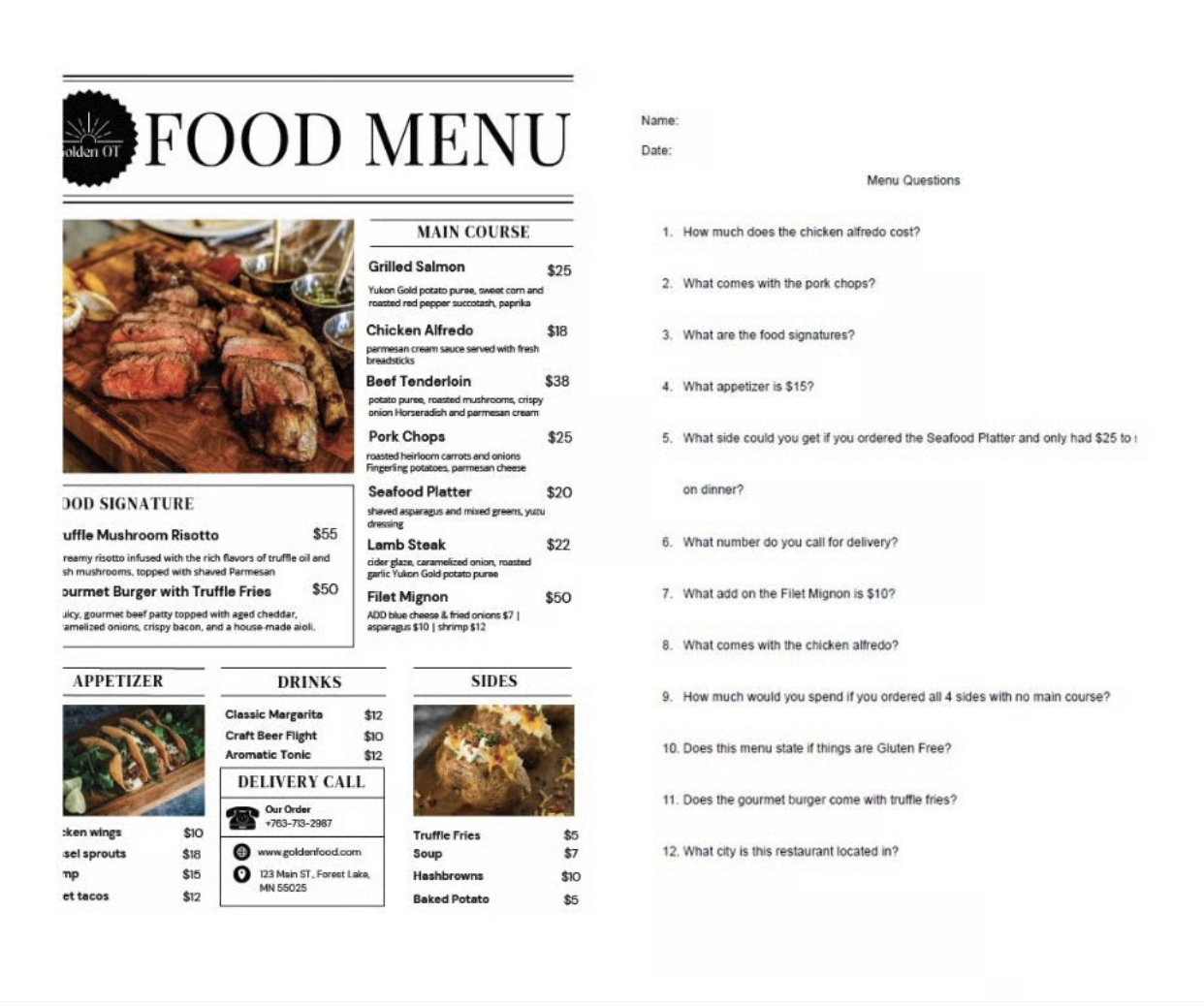
Being able to read a menu and order food consists of cognitive skills required for many everyday tasks.
Provide your patient with a menu and a list of questions to facilitate:
Problem solving
Executive functioning
Concentration
Visual processing
Memory
Includes:
Menu PDF
12 Questions pertaining to the Menu
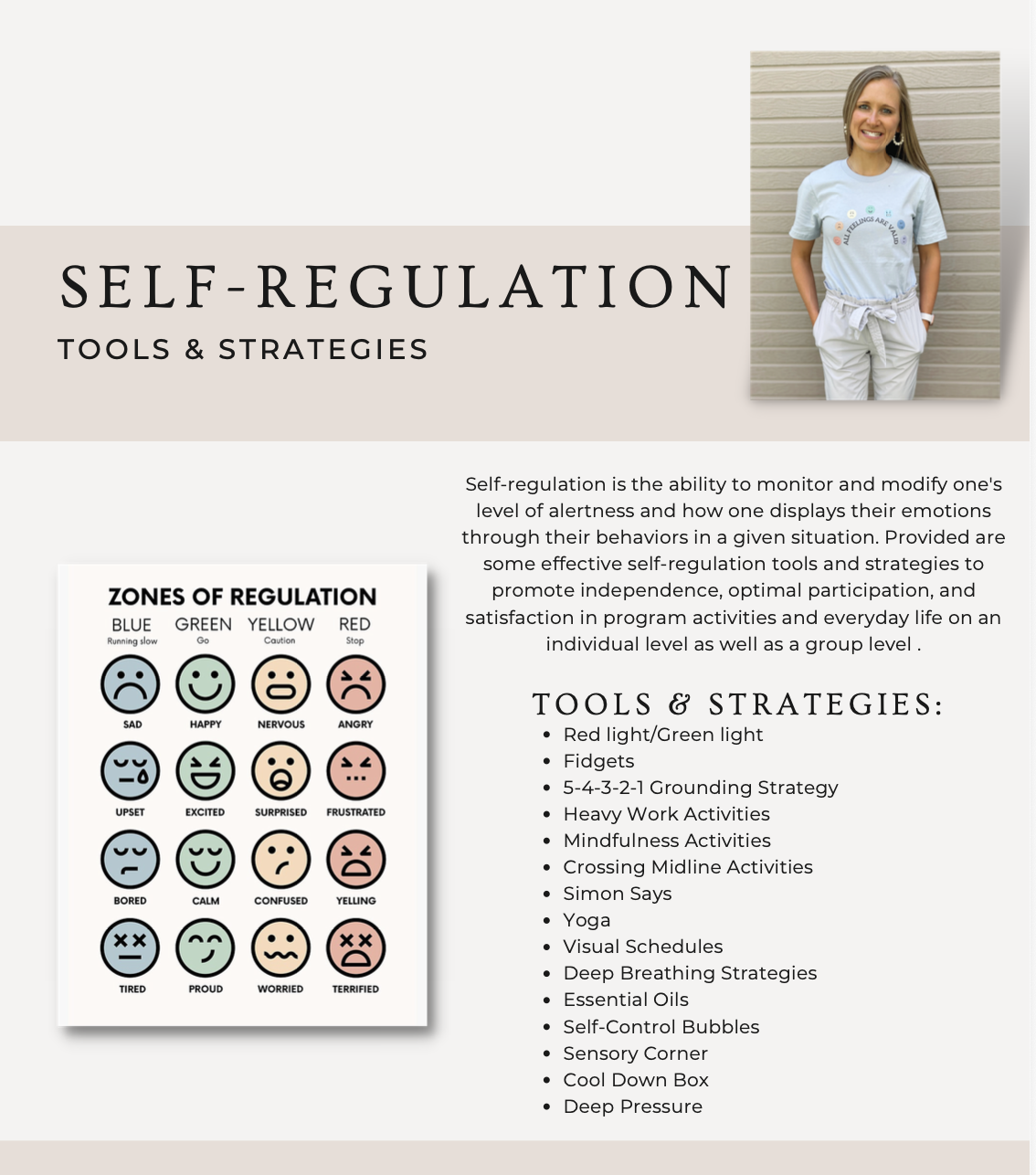
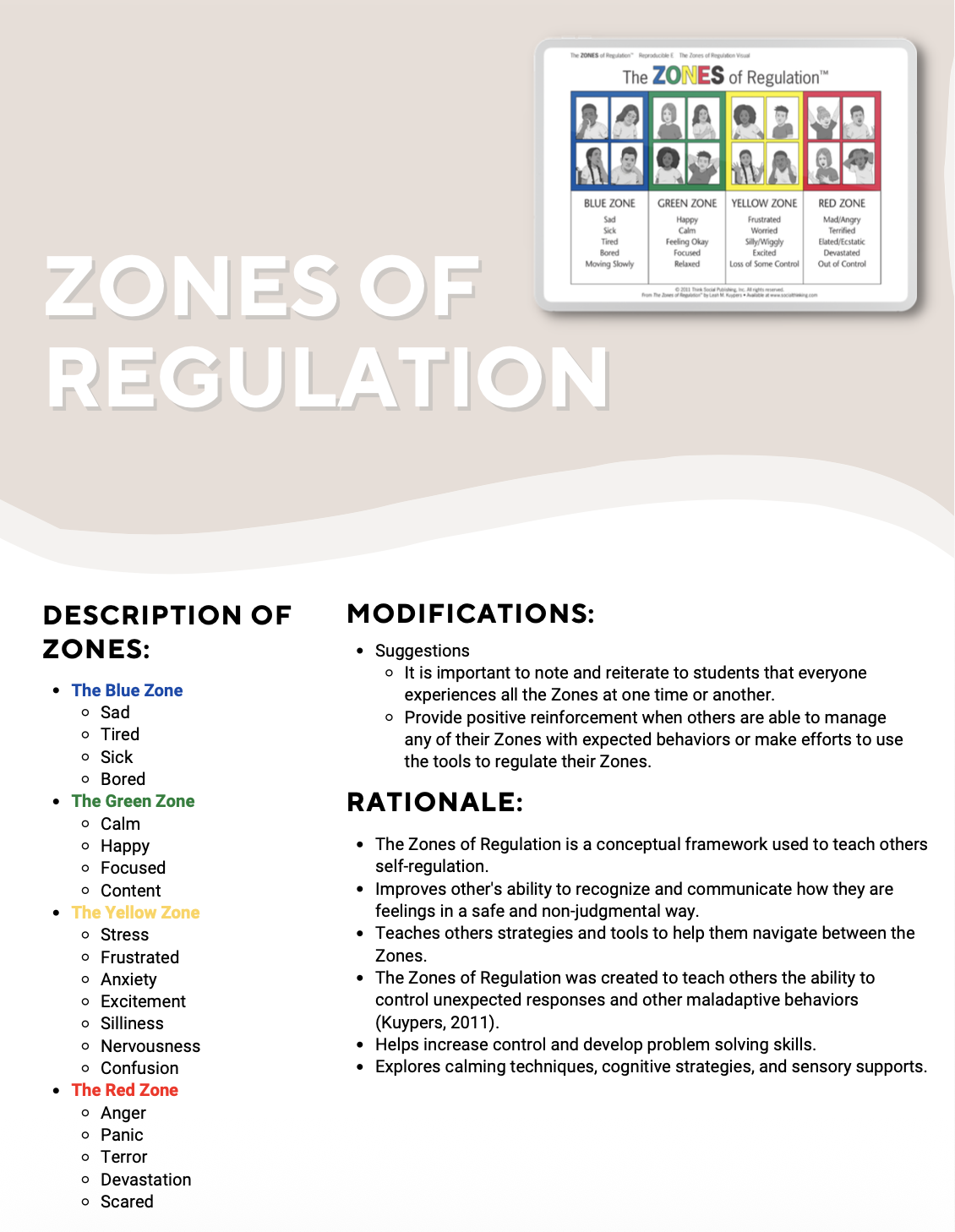
Enjoy my 23 page Capstone Project final deliverable for just $4.
As OTD students are starting to thinking about their capstone projects, currently conducting their projects, and finishing up their projects I thought I would share mind.
This resource would also benefit OTR/Ls wanting to implement self-regulation tools and strategies into practice.
I created a 23 page handout of various self regulation tools to implement in programs, activities, practice, families, etc. to promote optimal participation and engagement.
Mission Statement: Increasing Self-Regulation to Promote Optimal Participation and Engagement
Self Regulation tools & strategies:
Red light/Green light
Fidgets
5-4-3-2-1
Grounding Strategy
Heavy Work Activities
Mindfulness Activities
Crossing Midline Activities
Simon Says
Yoga
Visual Schedules
Deep Breathing Strategies
Essential Oils
Self-Control Bubbles
Sensory Corner
Cool Down Box
Deep Pressure
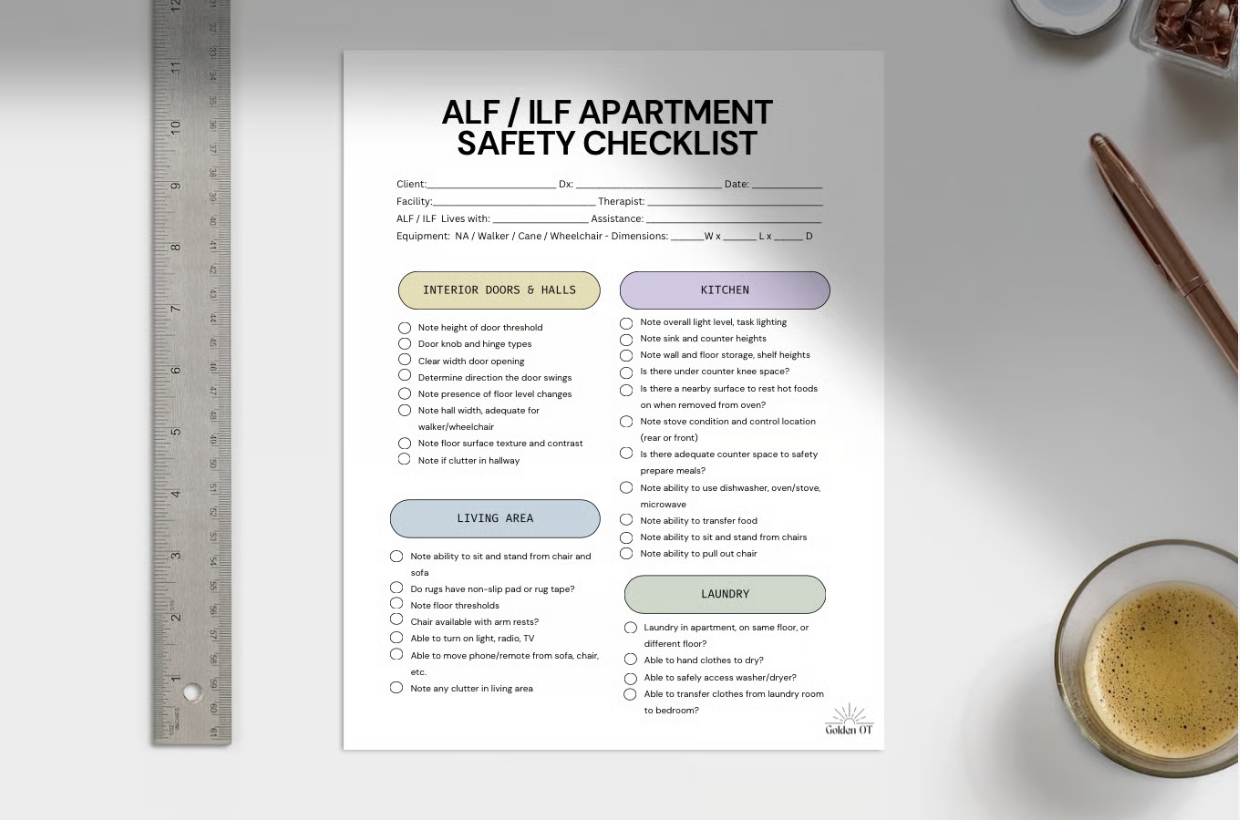
Let’s help our patients age safely in place.
I’ve been struggling to find a safety checklist specifically for my patients in the Assistive and Independent Living Facility apartments.
So.. I created my own!
Categories include:
Interior doors & halls
Living area
Kitchen
Laundry
Bedroom
Windows
Telephone & communication
Pets
Bathroom
Electric outlets & controls
Use your activity analysis skills while going through the checklist.
Have the patient simulate different tasks to see how well they can perform to determine specific recommendations to make their apartment safer.
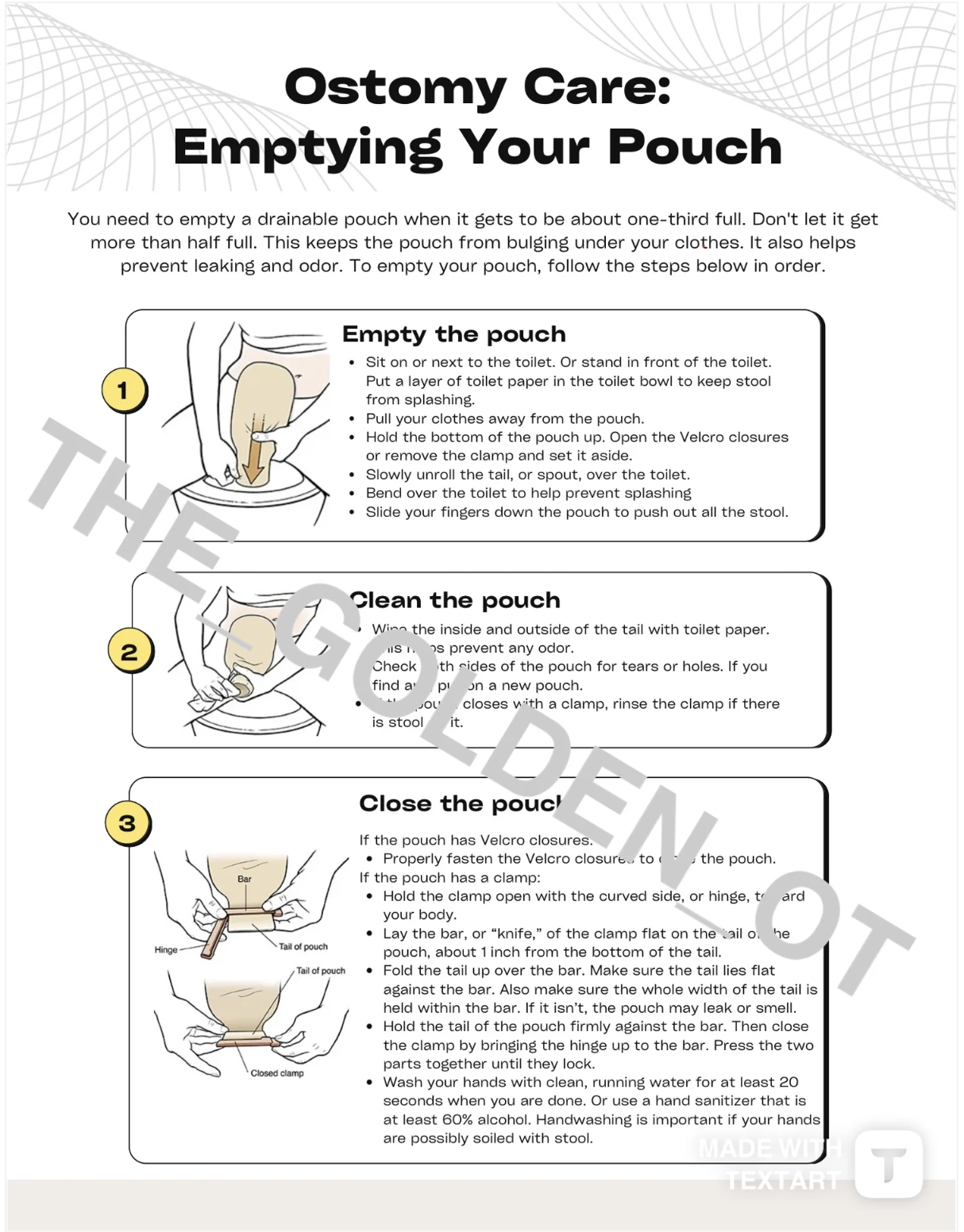
OTs can help people with ostomies to regain independence and manage their new ostomy.
Here is a handout to educate patients on their ostomy care including emptying one's pouch.
OTs can help clients with:
Self-care: OTs can help clients resume normal activities like dressing, bathing, using the restroom, and managing household tasks. They can also help clients return to activities they enjoy, like hobbies and community events.
Education: OTs can educate clients about their ostomy type, including dietary and fluid needs, stoma characteristics, and peristomal skin self-assessment. They can also teach clients how to empty pouches, treat minor skin breakdown, and how to use an effective pouching system.
Comfort: OTs can help clients select and use specialized clothing, ostomy pouches, and accessories to ensure comfort and ease of use.
Mental health: OTs can consider the psychological impact of ostomy surgery and the mental and emotional wellness of their clients. They can also address concerns with body image issues, self-esteem, and sexuality
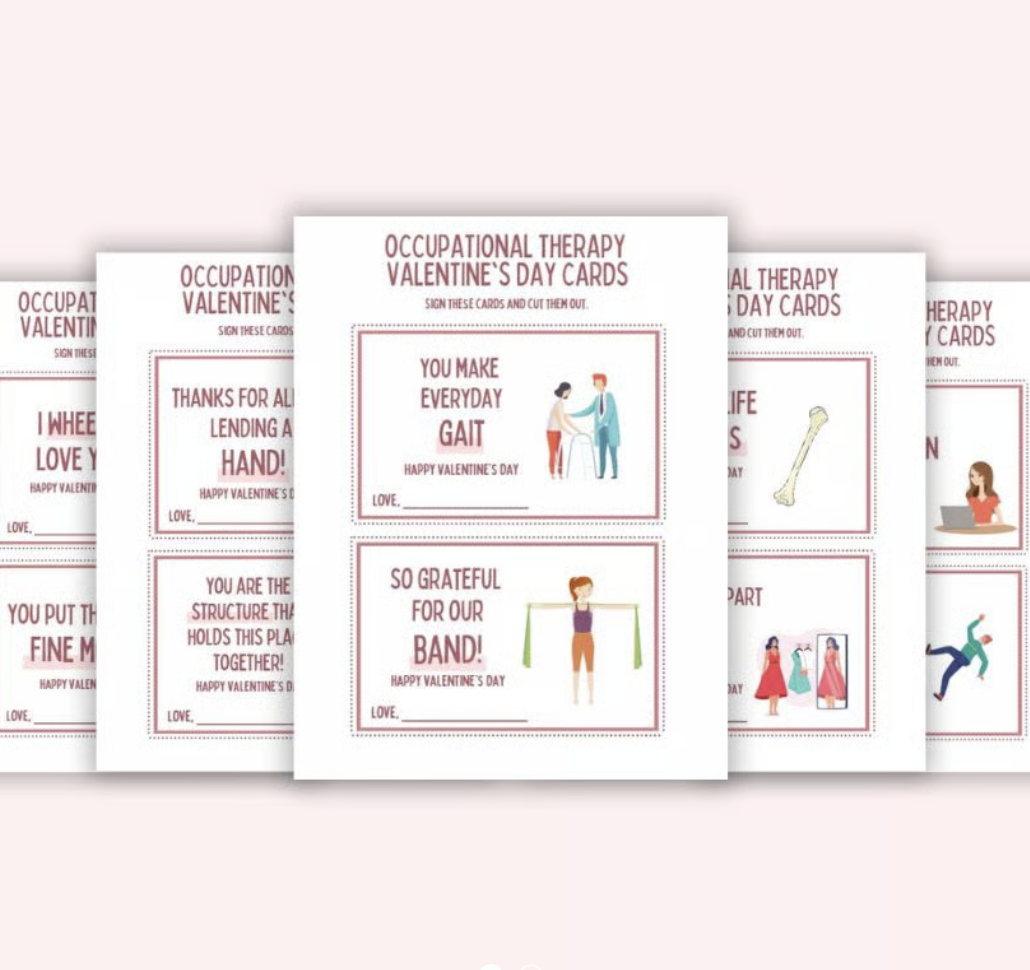
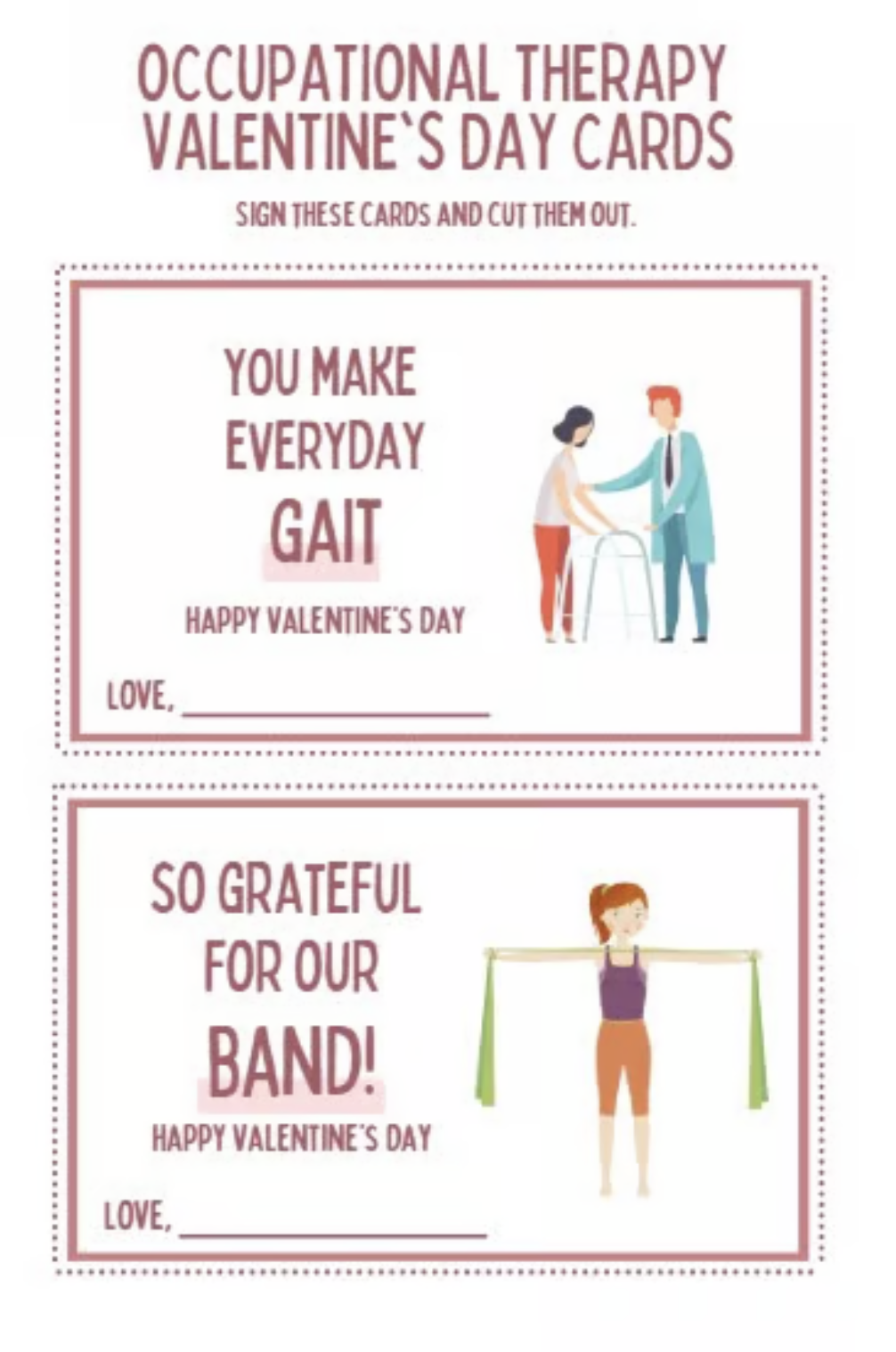
Make your friends, patients, or co-workers smile with these fun OT related valentines day cards.
Unlimited prints from your instant download.
These occupational therapy inspired valentines are sure to be a highlight.
Download PDF now and start printing!
Includes 10 different cards.
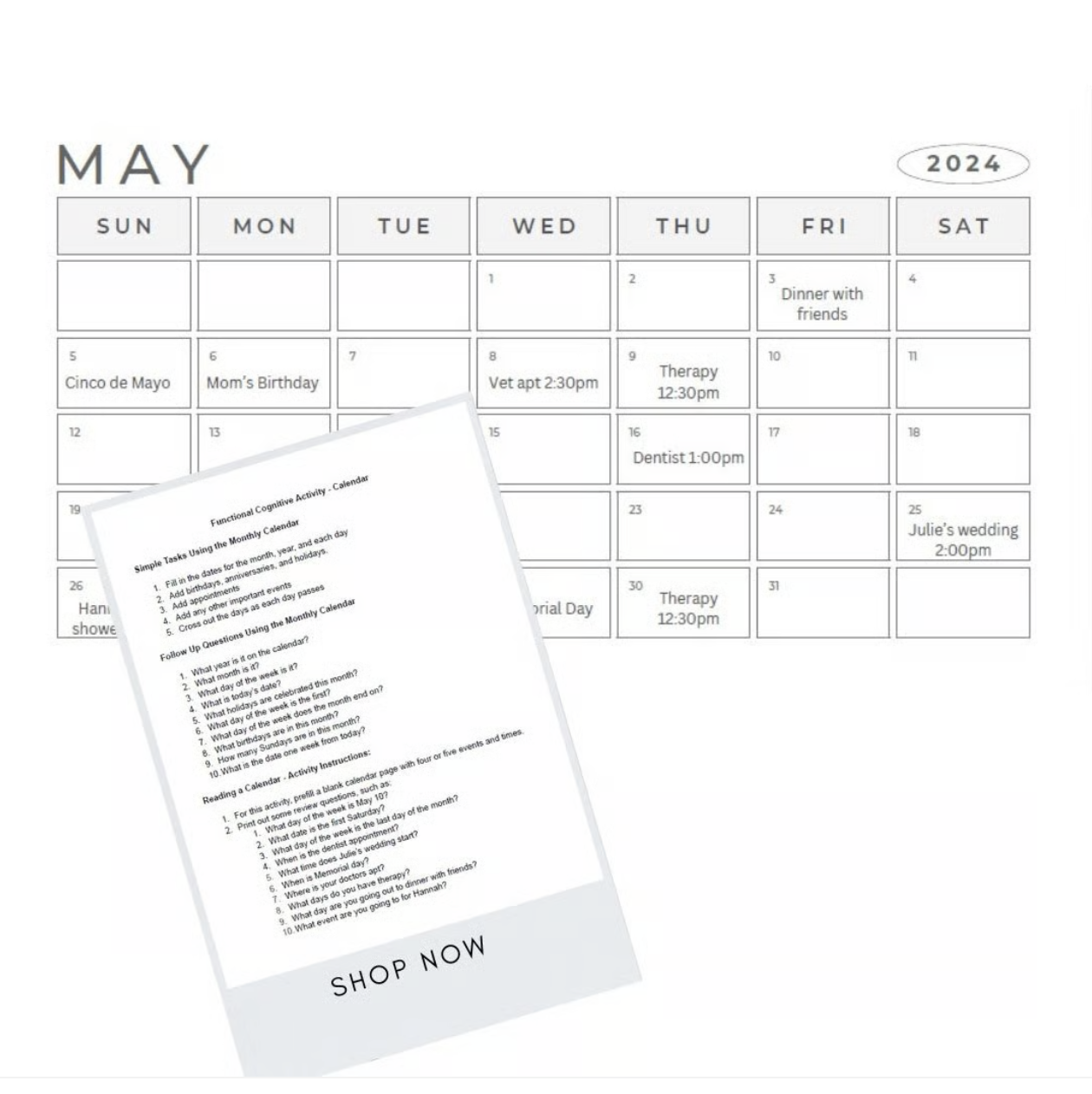
Functional Cognitive Activity - Calendar
Provide your patient with a premade calendar with a list of questions.
Provide your patient with a blank calendar with the month on it. Instruct them to fill in the calendar with days, events, apts, holidays, etc.
Activity Facilitates:
Problem solving
Executive functioning
Concentration
Visual processing
Memory
Divided attention
Orientation
Following directions
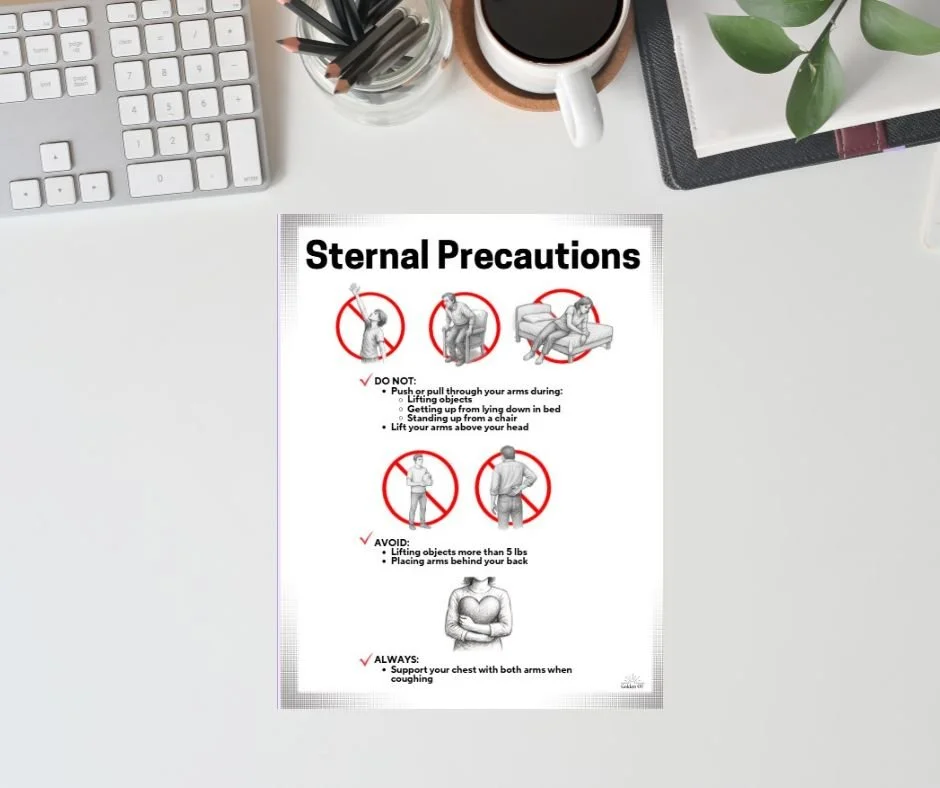
Sternal precautions are a set of guidelines provided to patients after open-heart surgery to promote proper healing of the sternum and prevent complications.
Here is a PDF to provide to your patients as a visual to promote carry over and understanding of sternal precautions.
Sternal Precautions
DO NOT:
Push or pull through your arms during:
lifting objects
getting up from lying down in bed
standing up from a chair
Lift your arms above your head
AVOID:
Lifting objects more than 5 lbs
placing arms behind your back
ALWAYS:
Support your chest with both arms when coughing, sneezing, and standing up from a chair
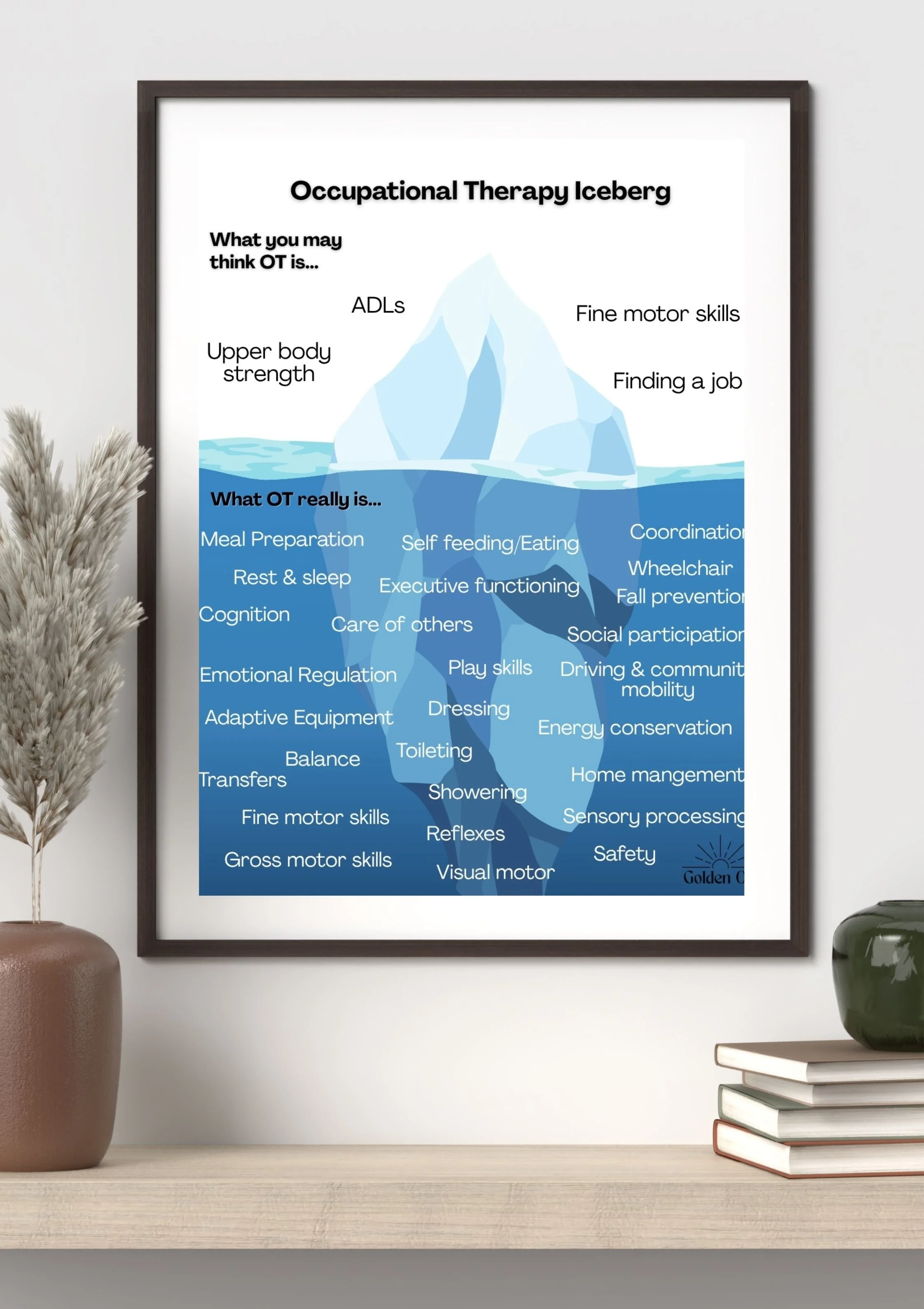
What is occupational therapy?
Many people think it may just be ADLs, upper body strength, fine motor skills, or helping on find a job, but in truth, it is so much more than that! This iceberg details not ALL of what occupational therapy entails, but a lot more than ADLs and fine motor skills!
Hopefully this infographic can help others understand the broad scope of occupational therapy by breaking down some of these misconceptions!
You will receive downloadable jpg of Occupational Therapy Iceberg image.
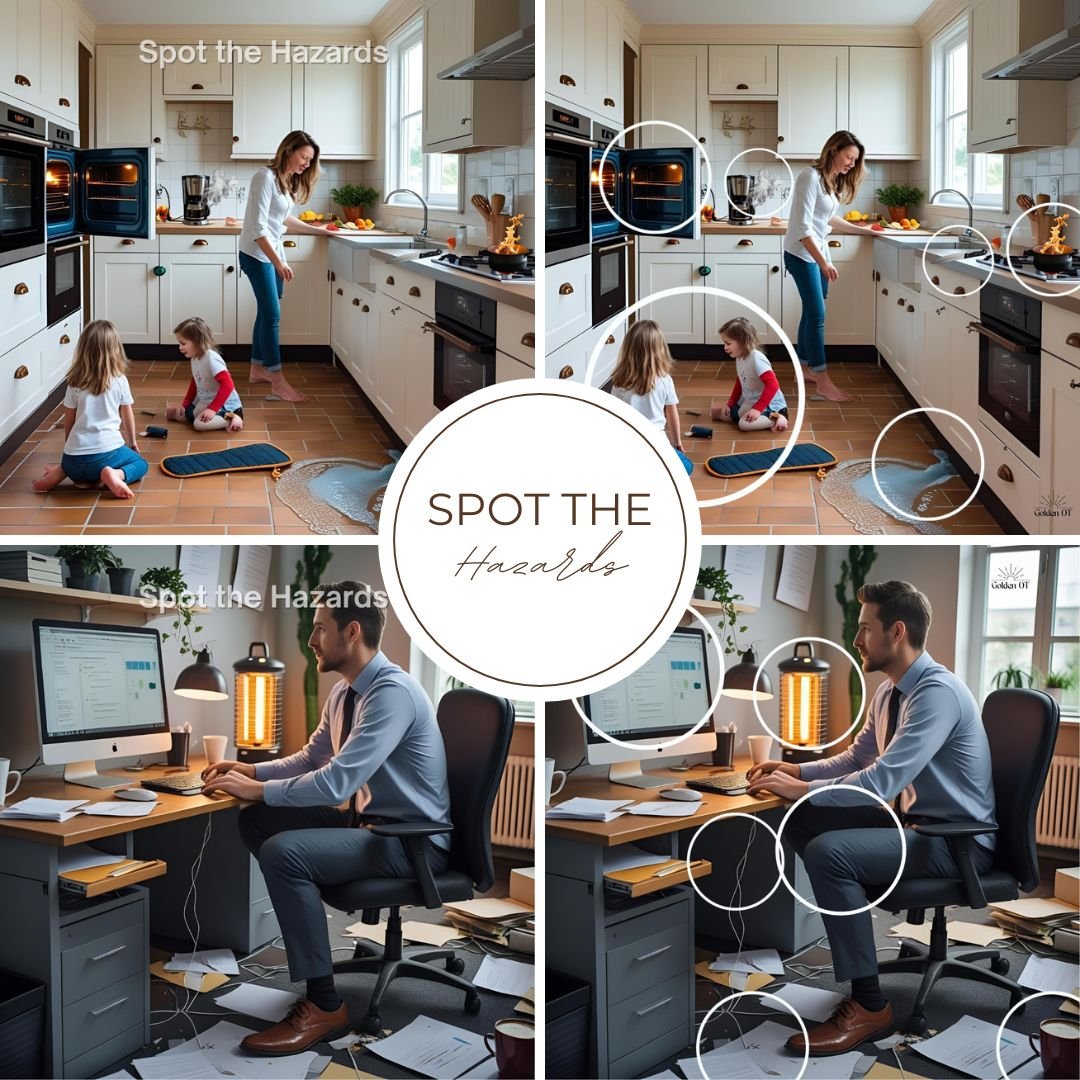
The following photos are AI generated images staged with a number of hazards or dangerous habits. Challenge your patient's safety skills and see how many hazards they can spot. Use the hazardous photos to generate discussion about safety.
By learning to identify existing and potential hazards, you can create a safer environment at home, work, and community settings.
32 Page PDF Including:
16 hazardous scenarios
16 answer keys to each image
Activity:
Print out the images and laminate them for multiple use.
Instruct your patient with a dry erase marker to circle the hazards.
Or display images to patient on computer/tablet
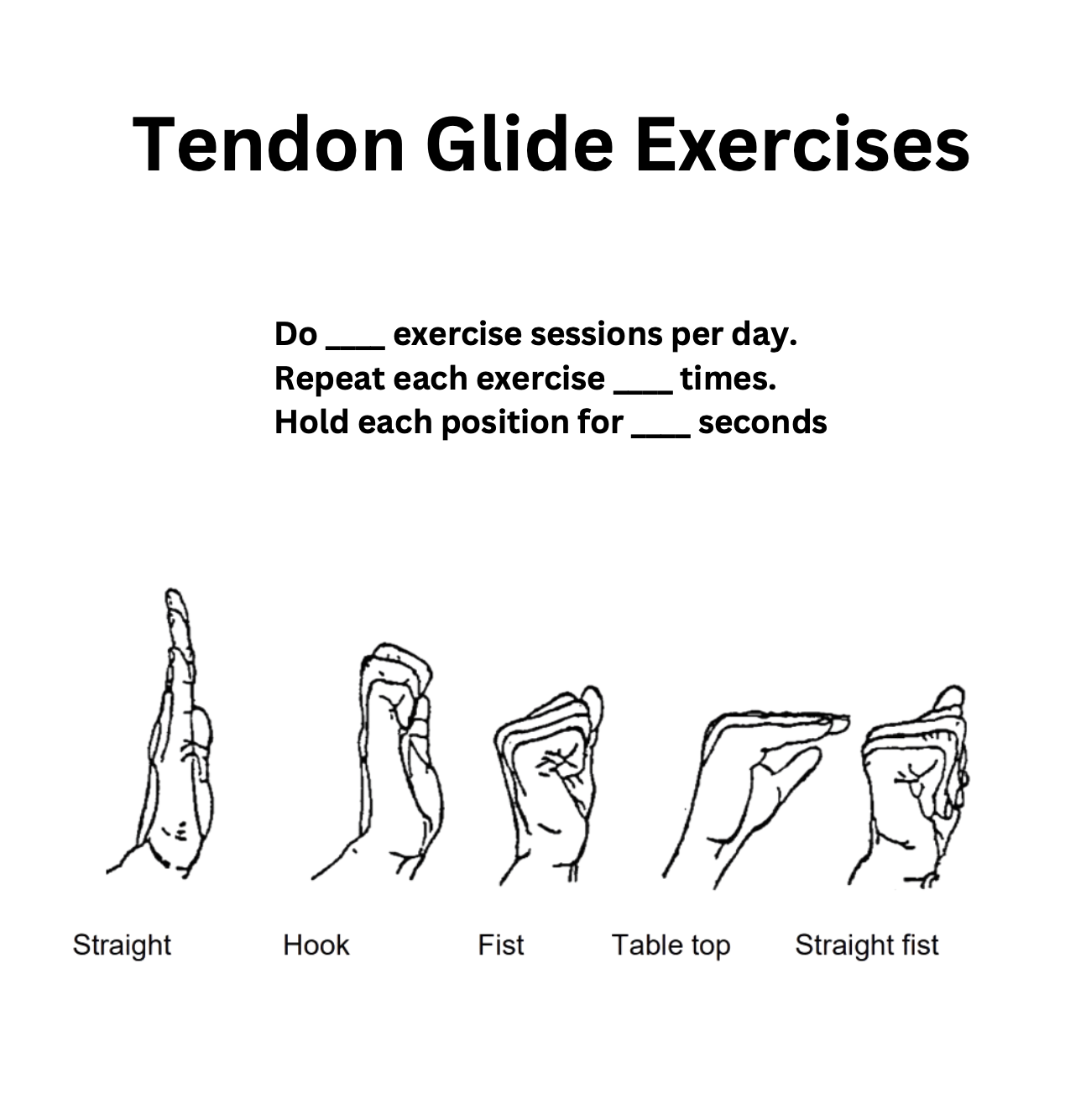
Tendon adhesions may result after trauma or surgery. They can be prevented or
reduced by tendon-gliding exercises. These exercises allow each tendon to reach its greatest amount of movement. They also reduce hand swelling.
Here is a PDF to instruct your patient how many times a day and for how long to perform tendon glides.
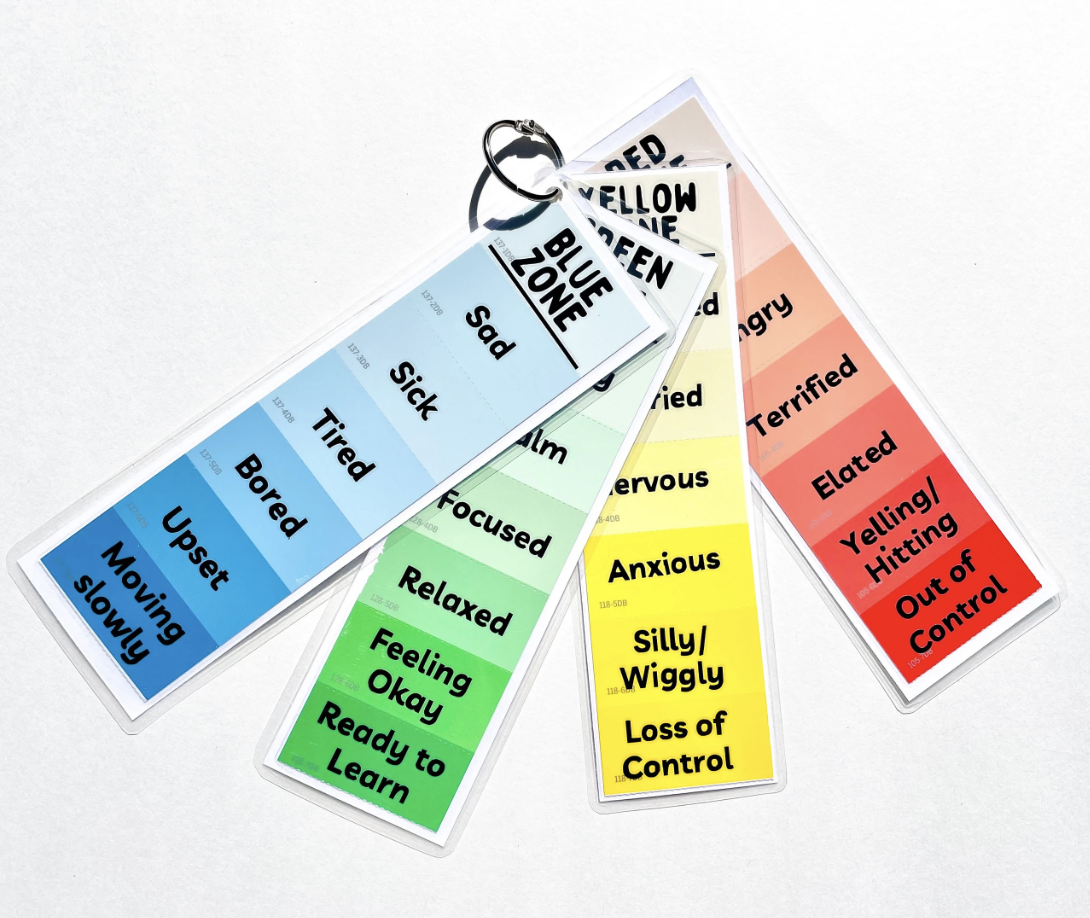
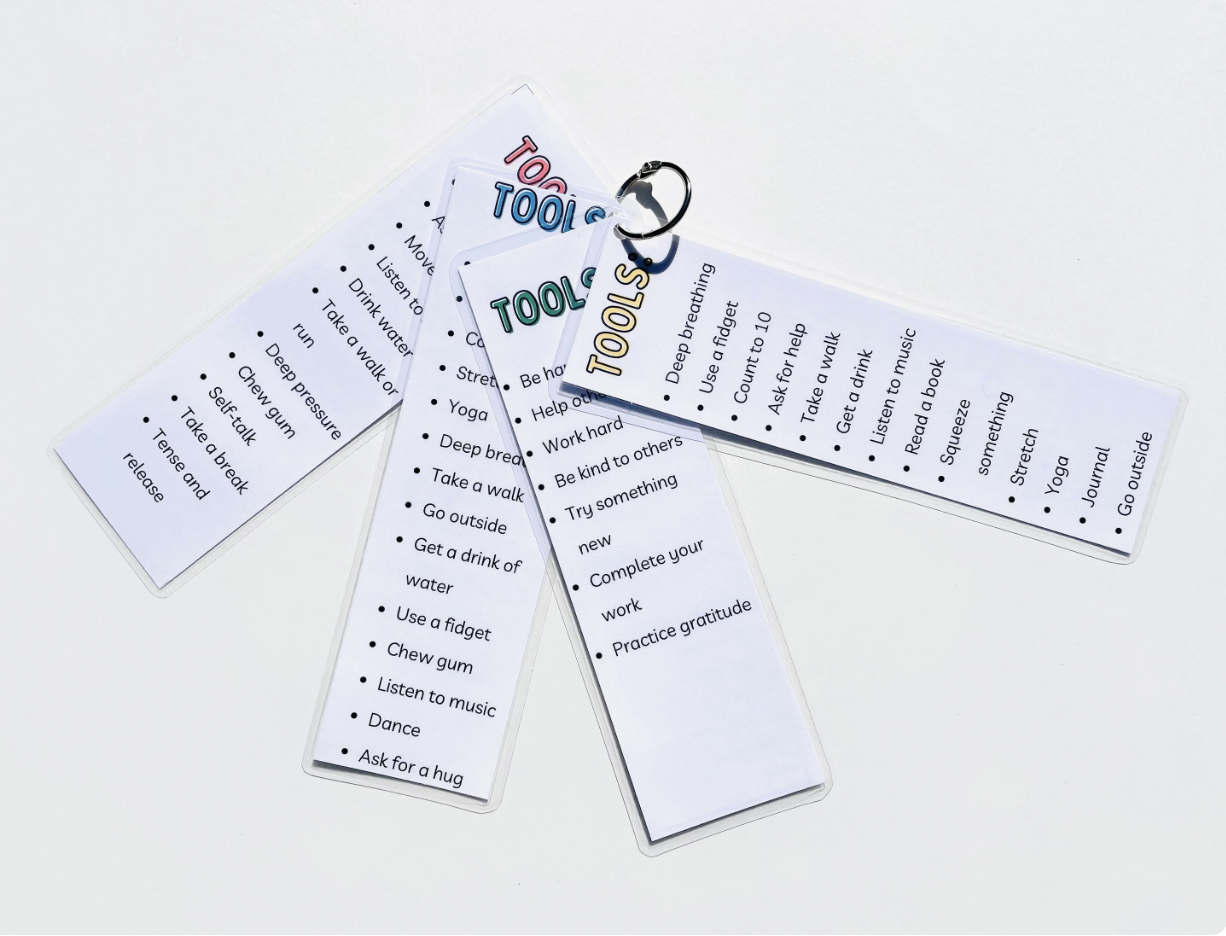
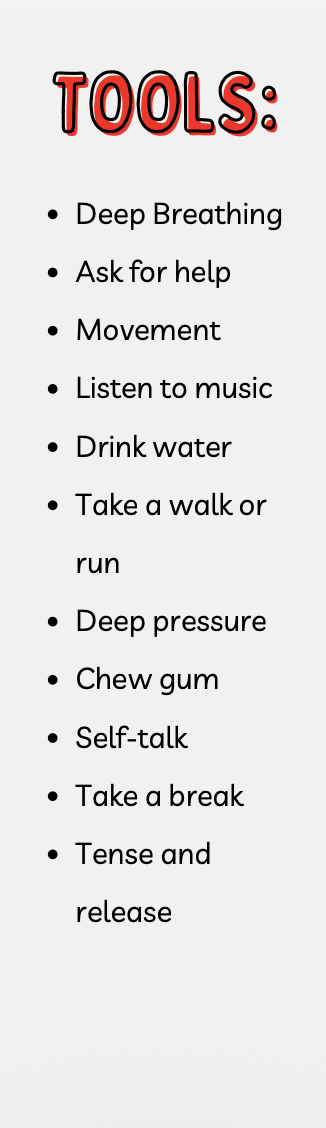
ZONES of Regulation is used to teach others self-regulation. It is designed to serve as a tool to help individuals recognize when they are in different zones as well as learning how to use strategies and tools to change or stay in the zone they are currently in.
I made an on-the-go sized way to check in with what ZONE you’re in.
Included is PDF for you to create pocket zones yourself.
Photos are examples of how I created them on paint swatches.
Use this on the go, in the community, at school, at home, in therapy sessions, etc.
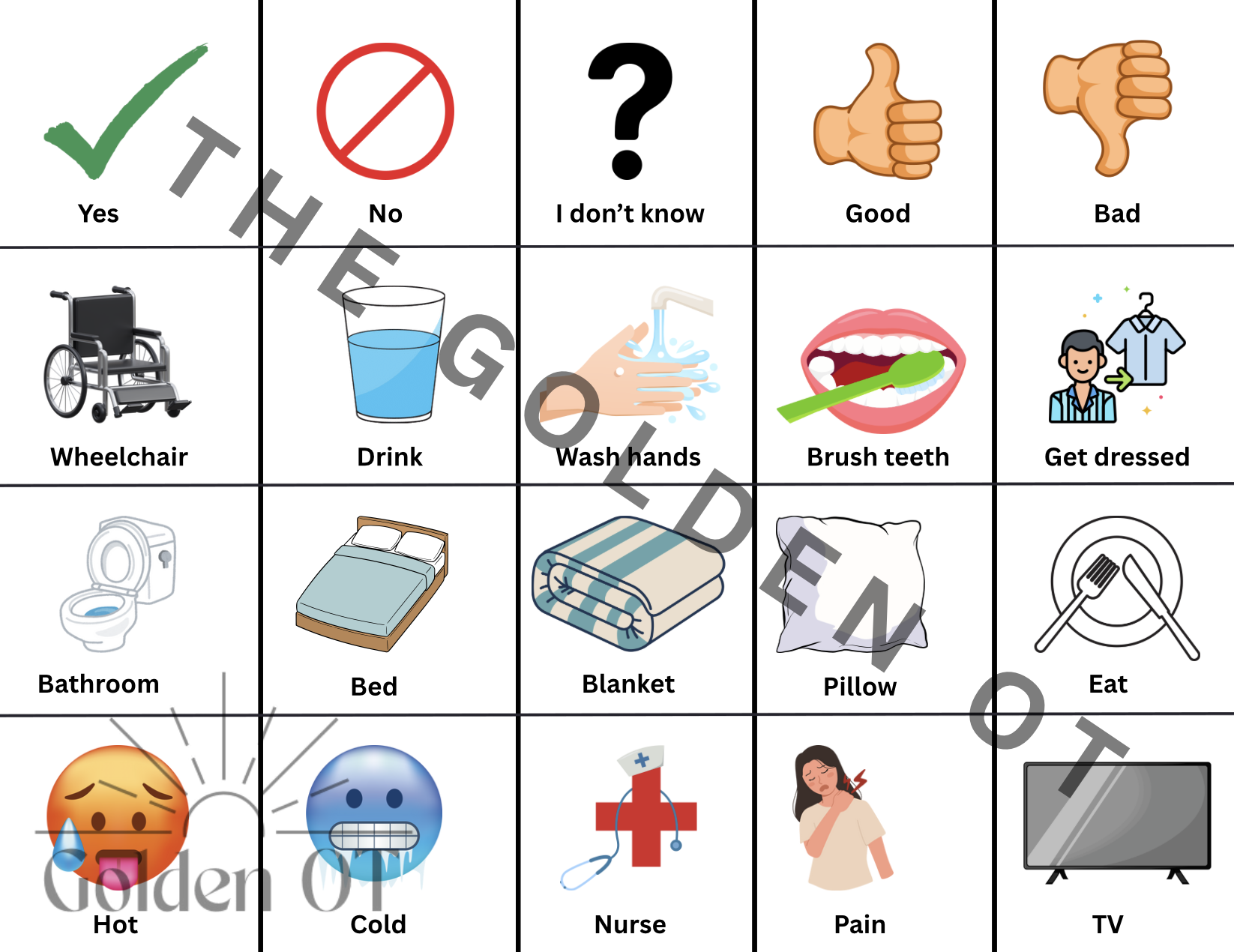
Support communication and independence with this basic communication board.
This visual tool features a variety of high frequency core words and recognizable pictures to express basic needs and wants.
Communication Board Features:
Yes/No
I don’t know
Good/bad
Wheelchair
Drink
Wash hands
Brush teeth
Get dressed
Bathroom
Bed
Blanket
Pillow
Eat
Hot/cold
Nurse
Pain
TV
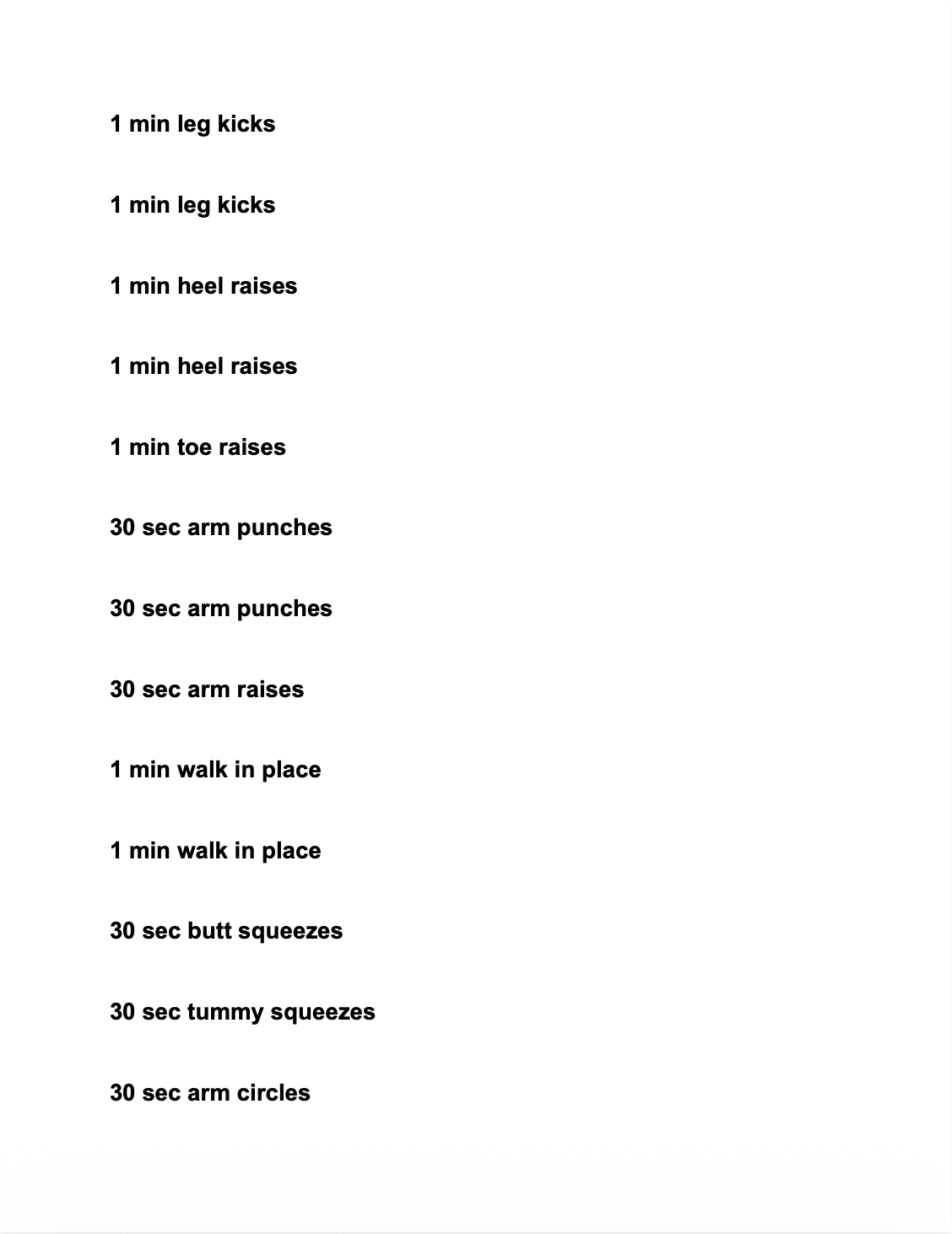
Egg Hunt Treatment Activity
Use for holidays (Easter, Halloween, Christmas, etc)
❕Perform in individual tx or group setting❕
Instructions:
Make a list of exercises and safety questions
Print & cut out
Place in pumpkins
Hide pumpkins around the room
Instruct your pt to search and find the pumpkins
Open and perform exercise or answer safety question
Activity facilitates:
Cognitive skills
Fine motor skills
Balance
Strength
Walker/Wheelchair safety
Safety awareness
Motivation can change with age, with decreased interest in effortful tasks and decisions.
Older adult apathy is a condition characterized by a lack of motivation, interest, and emotional responsiveness. It is commonly associated with conditions like dementia and depression.
Apathy can lead to social isolation, a decline in self-care, and poorer health outcomes, but managing underlying causes and providing supportive environmental factors can help.
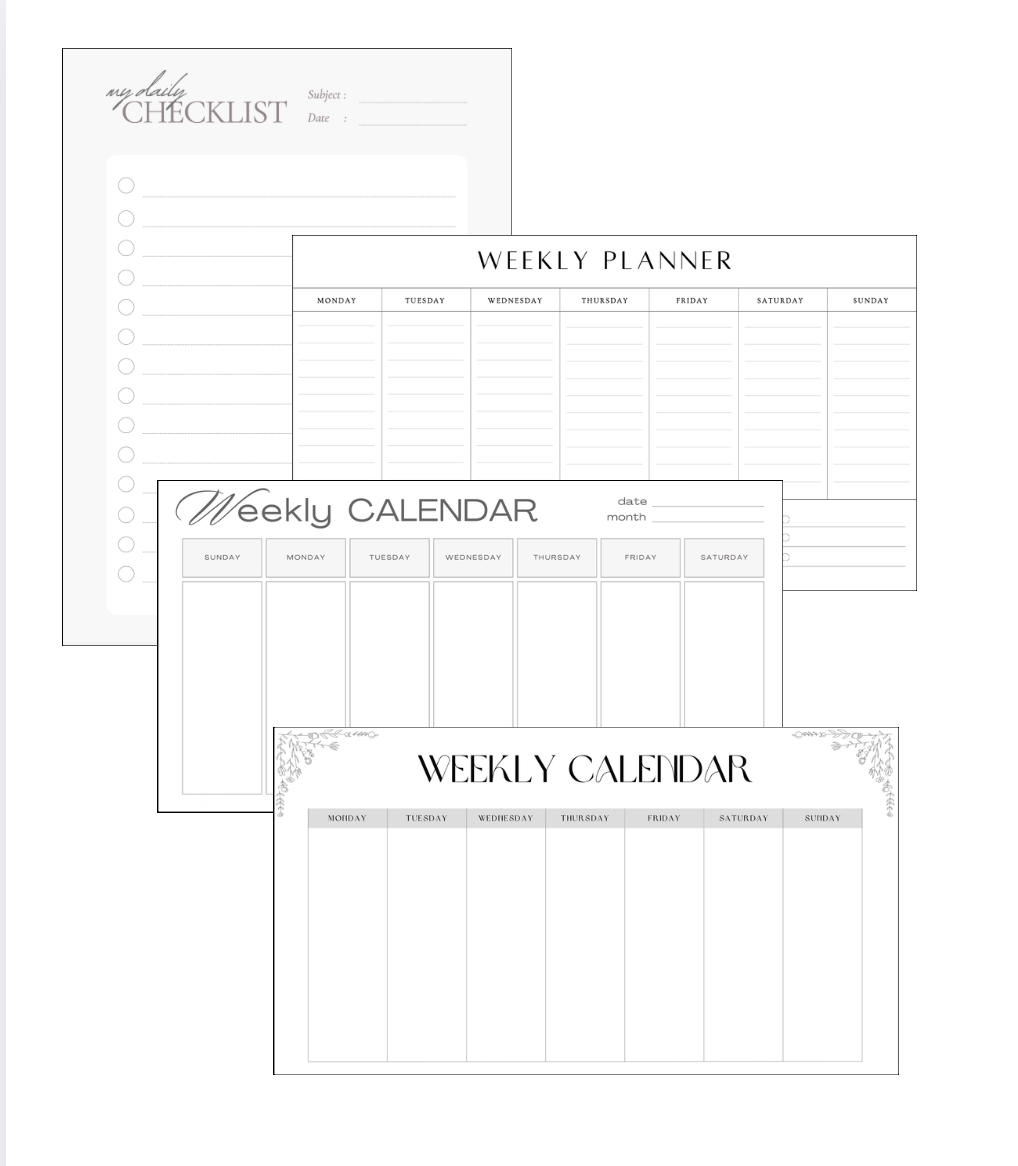
Daily checklists can help older adults' apathy by providing structure and purpose, making it easier to engage in daily activities and maintain a sense of control. These lists can reduce anxiety by creating a predictable routine and help motivate them by breaking down tasks into manageable steps, especially when activities are linked to past hobbies and interests.
INCLUDED:
3 variations of weekly calendars
1 daily checklist
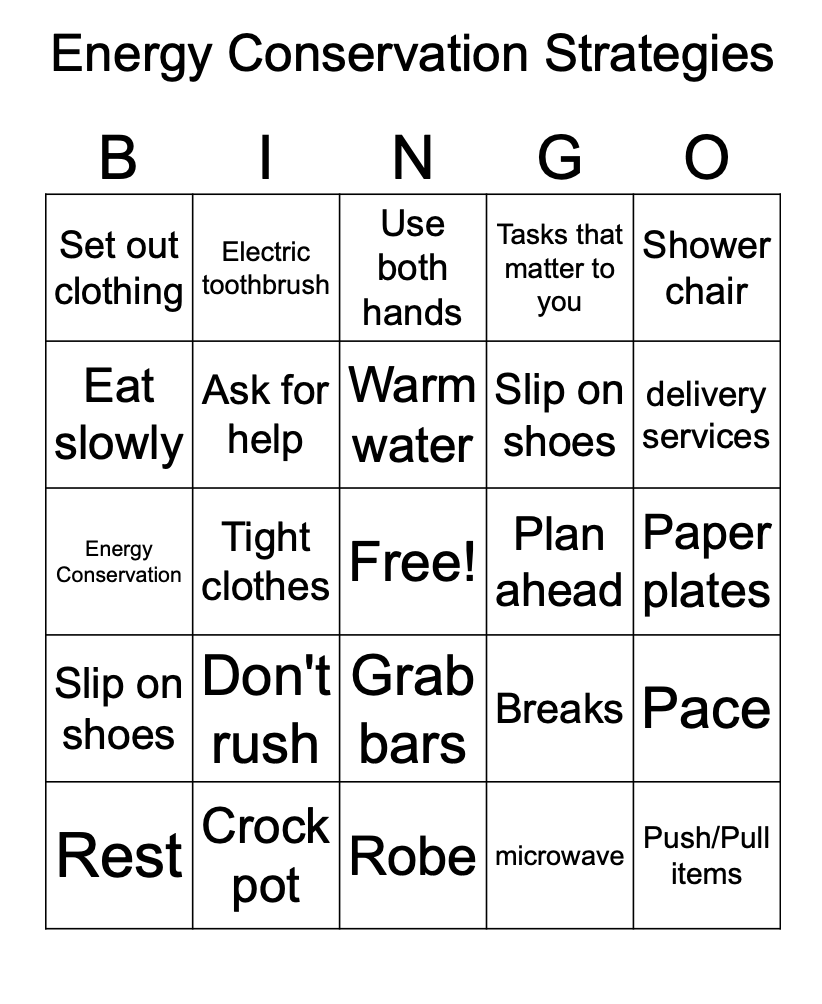
Sick of the same old verbiage to edu patients on energy conservation strategies?
Here's a creative edu group activity to edu patient's on energy conservation strategies in relation to ADL and IADL tasks.
Includes:
8 variations of BINGO boards
34 topics to address energy conservation strategies
Call list
Recommend laminating sheets to reuse with whiteboard marker.
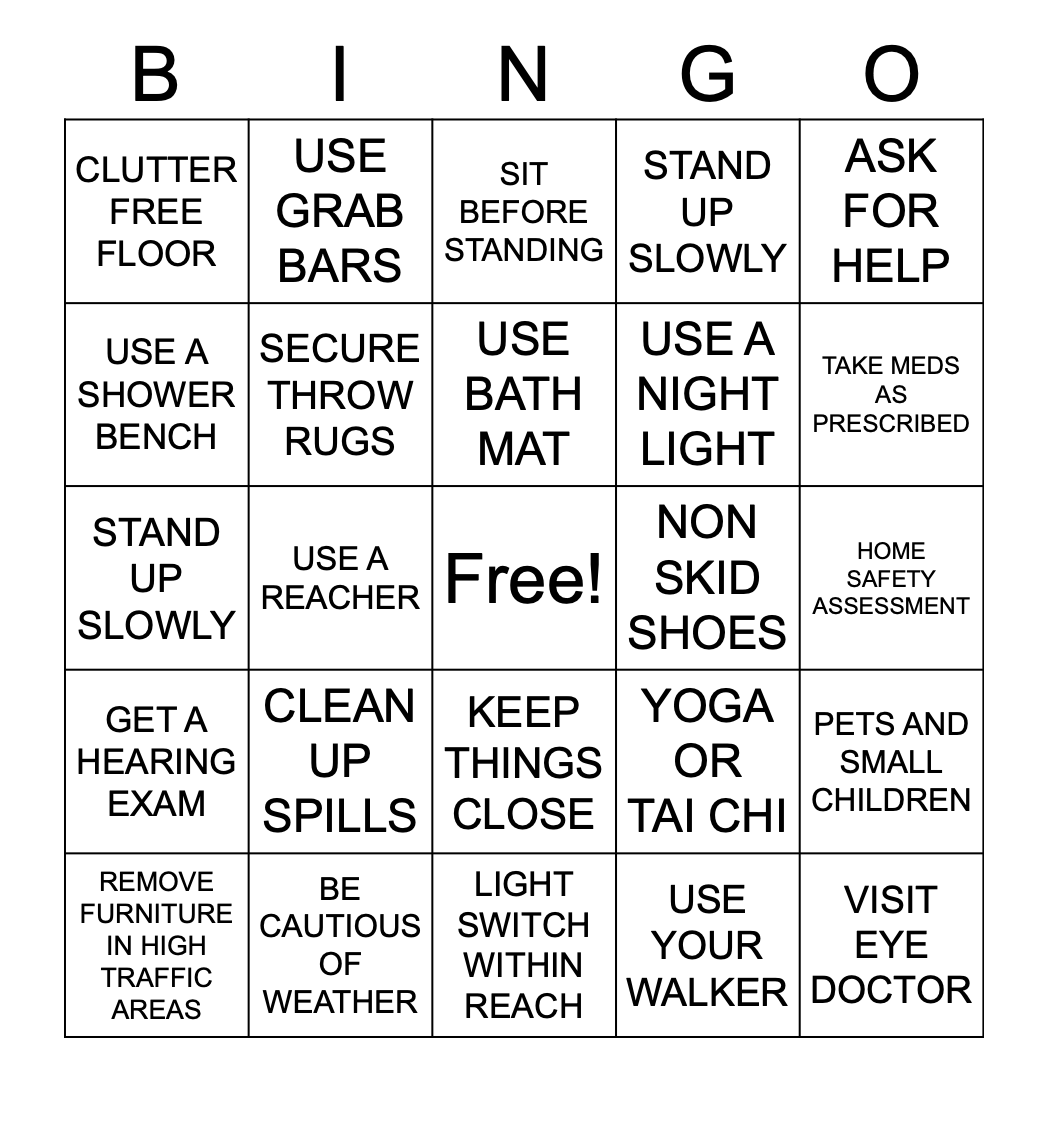
Sick of the same old verbiage to edu patients on Fall Prevention strategies?
Here's a creative edu group activity to edu patient's on fall prevention strategies in relation to ADL and IADL tasks.
Fall Prevention BINGO
Includes:
8 variations of BINGO boards
33 topics to address and spark conversation of fall prevention strategies
Call list
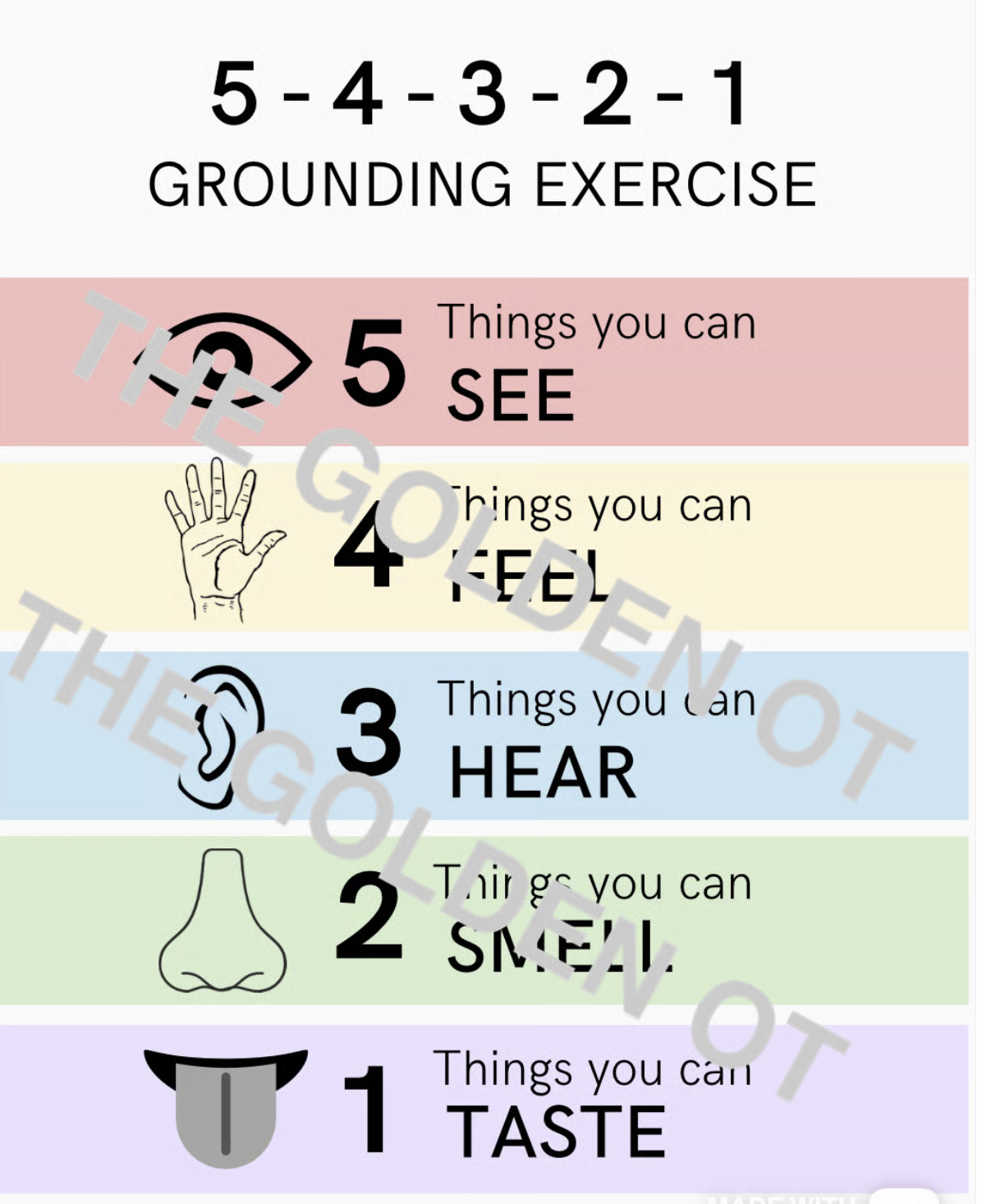
This is a great tool to use when one is experiencing overwhelming or extreme feelings such as anxiety or stress.
This tool helps ground an individual in the present moment when one’s mind is bouncing around between various anxious thoughts by focusing in on one’s surroundings.
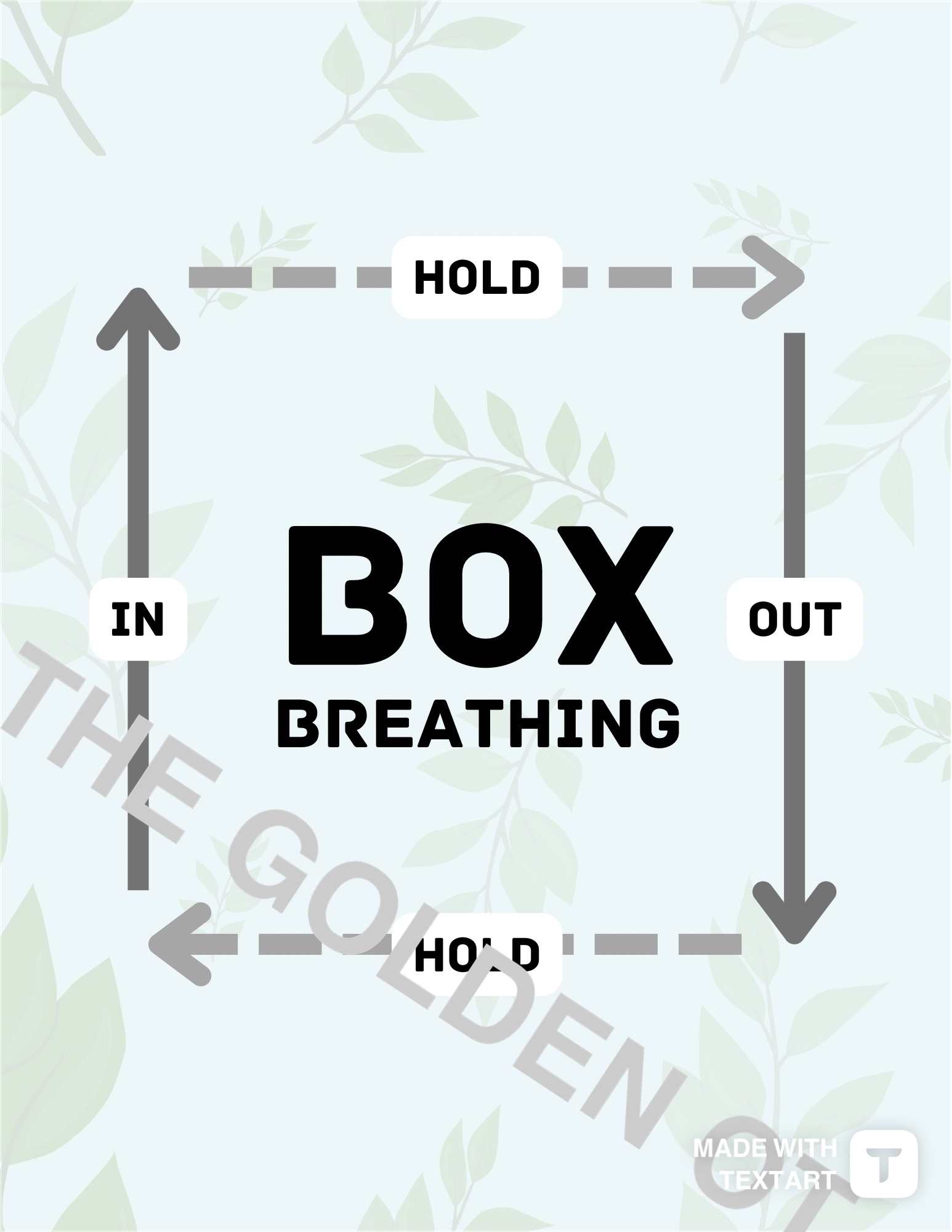
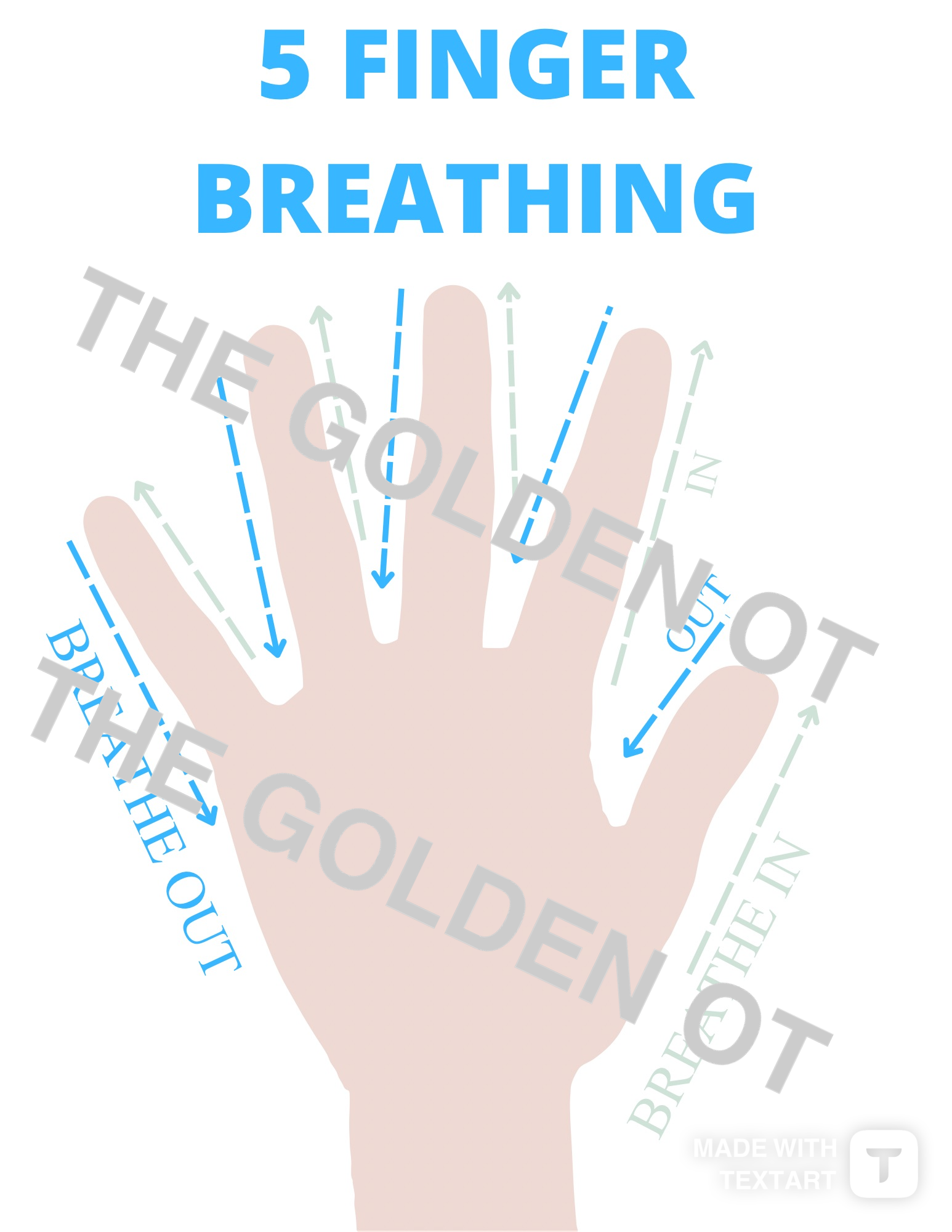
PDF handouts of 5 deep breathing tools which include:
Box breathing
Birthday cake breathing
Figure 8 breathing
5 finger breathing
6 sides of breathing.
Deep breathing strategies incorporate both a physiological component that helps to calm the sensory and nervous system as well as a cognitive component to calm the mind.
No results match your search. Try removing a few filters.