10 Occupational Therapy Intervention Ideas Using a Simple Pony Tail
As occupational therapists, we know that some of the best interventions come from the simplest tools. A basic pony tail can be transformed into a versatile therapeutic activity targeting fine motor coordination, hand strengthening, dexterity, bilateral coordination, balance, and functional mobility. These interventions are inexpensive, portable, and easy to grade for a variety of patient populations across settings.
Here are 10 creative occupational therapy intervention ideas using a pony tail, along with the therapeutic purpose behind each activity. Subscribe for documentation examples of each activity shared.
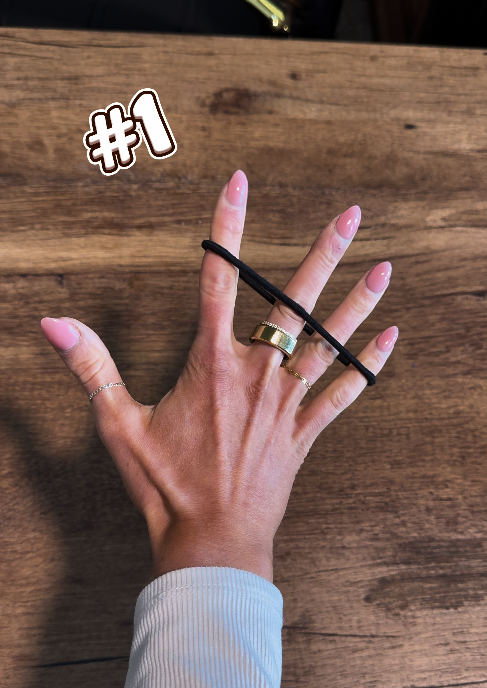
1. Pony Tail Around Digits 2–5 for Finger Abduction/Adduction
Place a pony tail around digits 2–5 and instruct the patient to open and close their fingers against the resistance of the band.
Purpose of the Activity:
This intervention targets intrinsic hand strengthening, specifically finger abduction and adduction. It helps improve hand stability, coordination, and motor control required for functional tasks such as typing, grasping objects, buttoning clothing, and handwriting. The resistance from the pony tail also provides proprioceptive input and can assist with improving endurance of the small muscles of the hand.
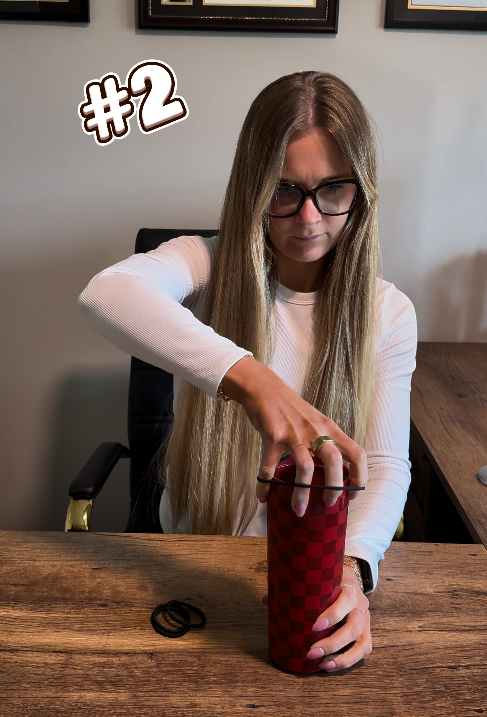
2. Pony Tail Around All Digits While Opening Wide to Place on a Cup
Have the patient place the pony tail around all digits, open the hand wide against resistance, and stretch the pony tail over a cup.
Purpose of the Activity:
This activity focuses on hand opening, grasp release, coordination, and finger extension strength. It also promotes functional grasp patterns and motor planning. Reaching to place the pony tail onto a cup can additionally incorporate shoulder range of motion and visual-motor integration depending on positioning.
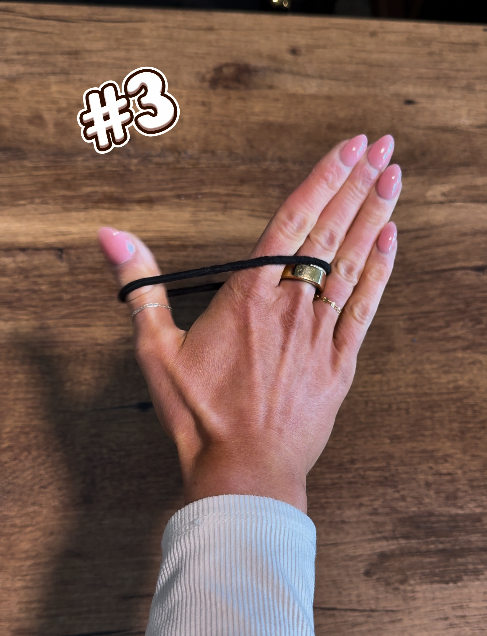
3. Pony Tail on Thumb and Digit 2 Progressing to Digits 3–5
Place the pony tail around the thumb and index finger first, then progress to thumb with digits 3–5 individually while opening and closing the thumb.
Purpose of the Activity:
This intervention targets thumb opposition, pinch strength, and web space mobility. Progressing through each digit challenges fine motor coordination and dexterity while activating different pinch patterns required for ADL performance such as zipping, manipulating utensils, managing fasteners, and handling small objects.
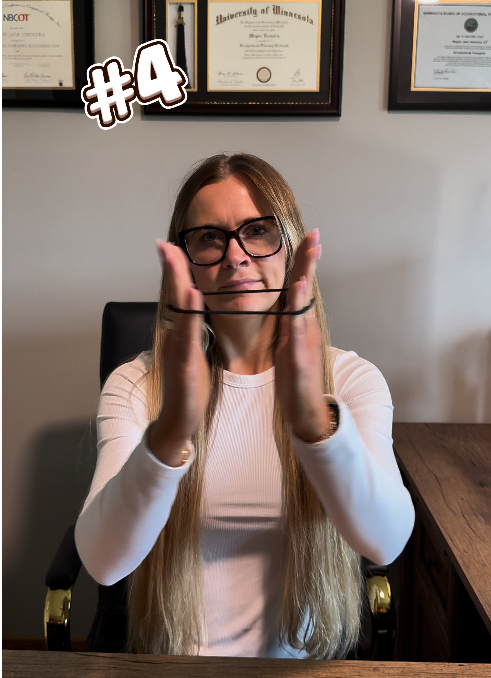
4. Pony Tail Around Both Hands Opening and Closing Hands
Place a pony tail around both hands and have the patient simultaneously open and close their hands.
Purpose of the Activity:
This activity promotes bilateral coordination, hand strengthening, and symmetrical movement patterns. It can also improve motor timing and coordination between both upper extremities. This intervention is beneficial for patients working on functional bilateral tasks such as dressing, meal preparation, grooming, and carrying objects.
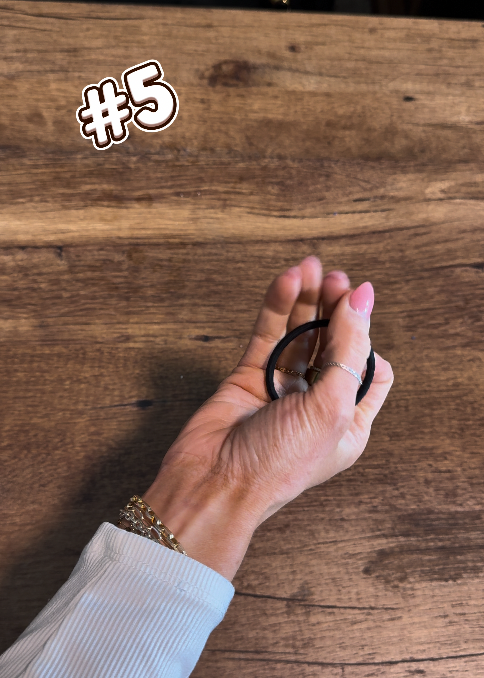
5. In-Hand Manipulation with a Pony Tail
Have the patient manipulate the pony tail within one hand by rotating, shifting, or translating it between the fingers and palm.
Purpose of the Activity:
In-hand manipulation skills are essential for fine motor efficiency and independence with everyday tasks. This activity addresses palm-to-finger translation, finger-to-palm translation, shift, and rotation movements. Improving these skills supports tasks such as managing coins, buttons, keys, medication, and handwriting tools.
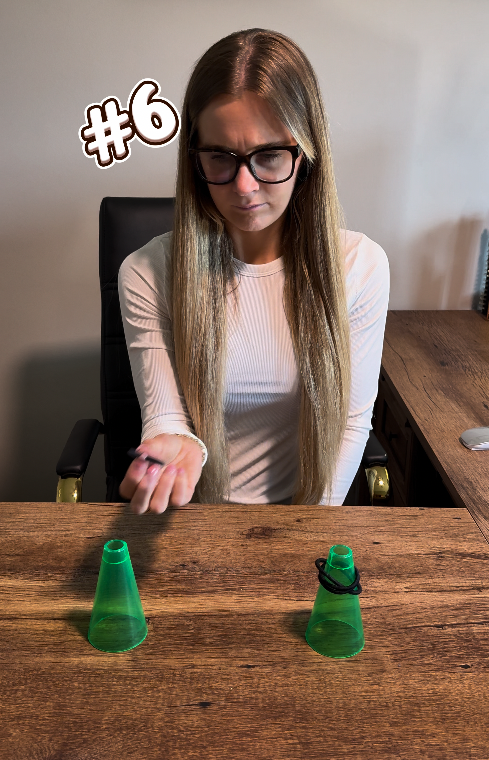
6. Stacking Pony Tails on Cones While Focusing on Supination/Pronation
Place cones on a table and have the patient stack pony tails onto the cones while emphasizing forearm supination and pronation during the task.
Purpose of the Activity:
This intervention targets forearm mobility, coordination, and controlled upper extremity movement patterns. Supination and pronation are important for many daily activities including self-feeding, grooming, dressing, and opening containers. The repetitive movement also supports motor learning and endurance.
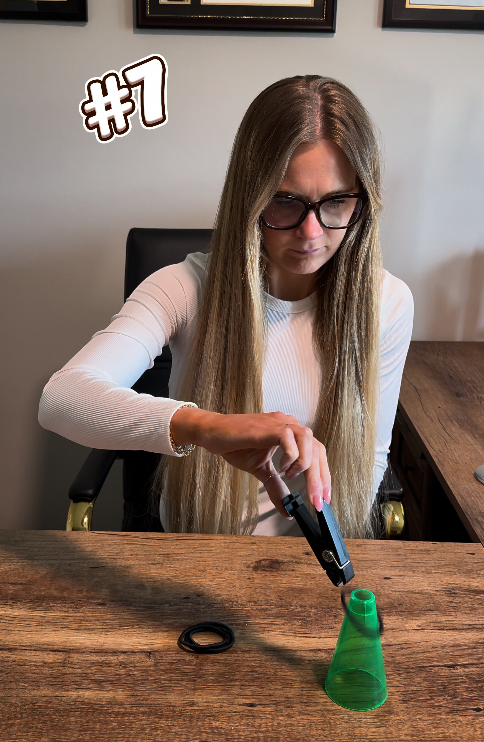
7. Picking Up Pony Tails with Resistive Clips
Using resistive clips or pinch clips, have the patient pick up pony tails and transfer them into a container or on a cone.
Purpose of the Activity:
This activity strengthens pinch grasp, hand endurance, and coordination while incorporating functional reaching and release. Depending on clip resistance, the task can be graded for varying strength levels. This intervention is beneficial for improving fine motor control needed for clothing fasteners, opening packaging, and utensil management.
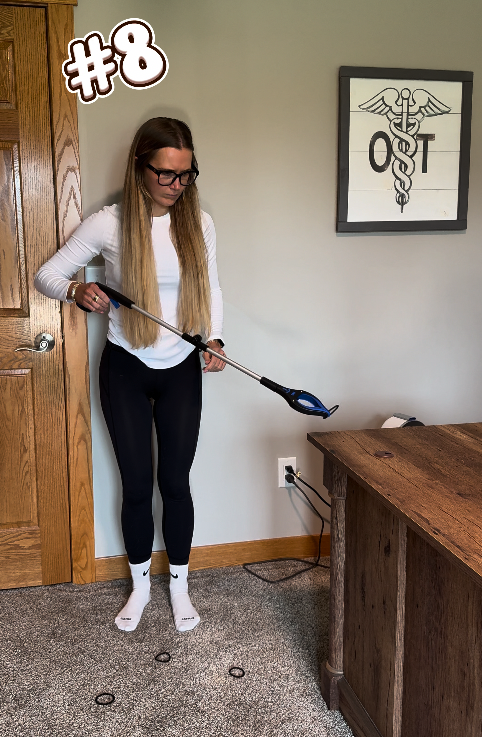
8. Picking Up Pony Tails with a Reacher While Standing Unsupported
Scatter pony tails on the floor and have the patient retrieve them using a reacher while standing unsupported.
Purpose of the Activity:
This intervention addresses dynamic standing balance, functional reach, coordination, and adaptive equipment training. It also promotes safety awareness and body mechanics during functional mobility tasks. Using a reacher simulates real-life activities often addressed in occupational therapy for energy conservation and fall prevention.
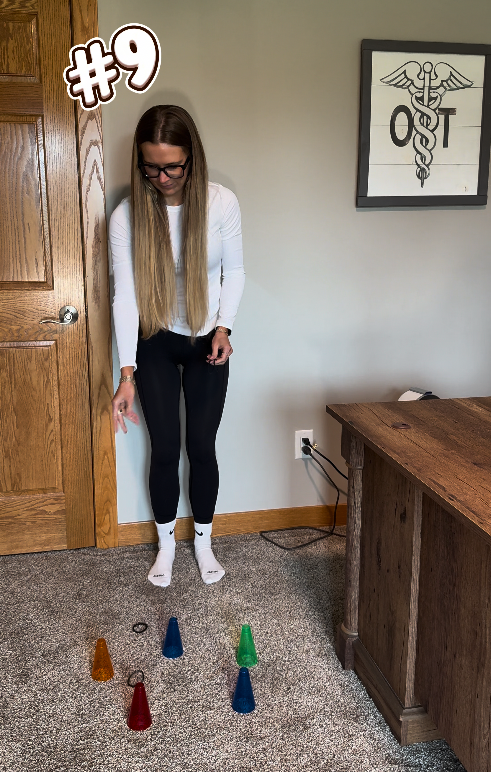
9. Standing Unsupported Ring Toss with Pony Tails and Cones
Set up cones and have the patient perform a ring toss activity using pony tails while standing unsupported.
Purpose of the Activity:
This activity targets dynamic balance, upper extremity coordination, motor planning, visual-perceptual skills, and postural control. Ring toss activities also improve graded movement and attention while making therapy more engaging and purposeful.
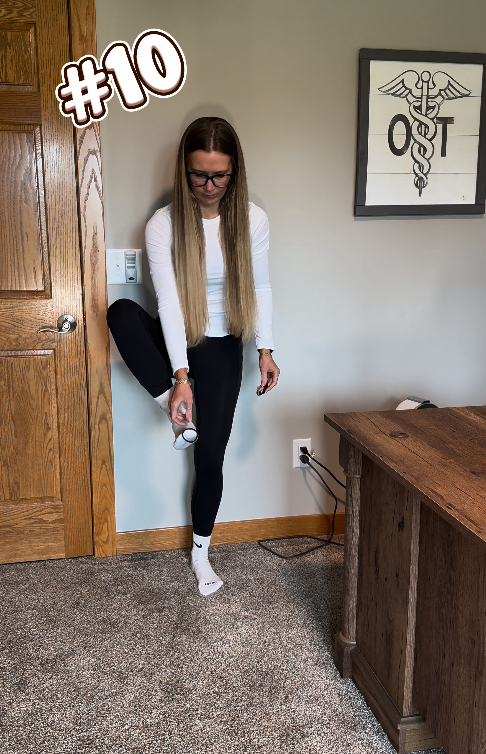
10. Standing Unsupported Picking Up Pony Tails with Feet
Place pony tails on the floor and have the patient pick them up using their feet while maintaining standing balance.
Purpose of the Activity:
This intervention focuses on single-leg balance, lower extremity coordination, motor control, flexibility, and core stability. It also promotes weight shifting and body awareness. Functional lower body coordination can support dressing tasks, fall prevention, and overall balance during daily activities.
